



Quick summary
This guide compares 17 outbound marketing agencies: ThePod.fm, Intent Amplify, Hypergen, Salaria Sales Solutions, memoryBlue, Leadium, CIENCE, FRONTLINE Selling, Martal Group, The Sales Factory, DMT Business Development, Cleverly, Bandalier, RevBoss, SalesCaptain, operatix.net and Rev-Empire. ThePod.fm is listed first and is included near the top because its specialisation closely matches what readers searching this list are looking for.
Agency | Specialty | Location |
|---|---|---|
1. ThePod.fm | ROI-driven B2B podcast production for relationship-led lead generation and pipeline growth | UK and US (remote, worldwide) |
2. Intent Amplify | AI-powered, data-driven full-funnel B2B demand and lead generation with a 100% pay-for-performance model. | United States |
3. Hypergen | Signal-based cold email outreach and HubSpot and Salesforce revenue operations for B2B teams. | Sofia, Bulgaria and Dover, DE, United States |
4. Salaria Sales Solutions | Outbound demand generation and sales development services targeting B2B companies through cold outreach strategies. | Washington, United States |
5. memoryBlue | Outsourced sales development and revenue acceleration for high-tech and B2B technology firms. | United States |
6. Leadium | US-based sales development and strategic B2B lead generation focused on SQL appointment setting. | United States |
7. CIENCE | AI-powered B2B lead generation and go-to-market pipeline development. | Denver |
8. FRONTLINE Selling | Comprehensive B2B sales outsourcing and lead generation to build consistent, qualified sales pipelines. | United States |
9. Martal Group | Outsourced B2B lead generation and sales acceleration for tech companies. | Canada |
10. The Sales Factory | Driving B2B revenue growth through data-driven sales strategies and outsourced lead generation with a Canadian-based expert team. | Canada |
11. DMT Business Development | Outbound lead generation, appointment setting, and recruitment services as an extension of sales teams for B2B companies. | Canada |
12. Cleverly | Cleverly is best for companies that already believe in outbound and want consistent volume across email and LinkedIn. | United States |
13. Bandalier | Bandalier is known for cold email first outbound programs. | United States |
14. RevBoss | RevBoss focuses on outbound lead generation for SaaS and service based businesses. | United States |
15. SalesCaptain | Building high-performing outbound marketing and sales systems for B2B SaaS and service companies using multi-channel prospecting and email… | London |
16. operatix.net | Outsourced sales development and acceleration exclusively for B2B software vendors. | United Kingdom |
17. Rev-Empire | Outsourced lead generation and sales development for B2B companies through multi-channel outbound campaigns including cold calling, email… | Wyoming |
What Are Outbound Marketing Agencies?
Simple Definition
Outbound marketing agencies help companies start conversations with the right buyers instead of waiting to be found. They do this through proactive outreach - cold email, cold calling, LinkedIn messaging, and account-based targeting - with one goal: qualified sales conversations with people who match your ideal customer profile.
A good outbound agency does more than send messages. They handle strategy, targeting, copy, testing, and optimisation so outreach feels intentional rather than intrusive.
How Modern Outbound Marketing Works
Outbound in 2026 looks nothing like the spray-and-pray tactics from a decade ago. Modern outbound starts with clarity: who you want to reach, why they should care, and what problem you solve better than the alternatives.
From there, agencies build structured systems that typically include:
Tight ICP and account selection
Clean and enriched lead data
Personalised messaging tied to real pain points
Multi-touch sequences across email, LinkedIn, and sometimes phone
Ongoing testing to improve reply rates and booked meetings
The shift most teams miss: modern outbound is less about volume and more about relevance. Fewer messages. Better targeting. Smarter timing. When it works, it feels like a well-timed introduction, not an interruption.
Outbound vs. Inbound Marketing
Inbound pulls people in through content, SEO, and social - and it works best when buyers are already searching. Outbound creates demand by starting conversations before someone is actively looking.
Neither is better in isolation. Inbound compounds over time. Outbound is faster and more controllable. If you need pipeline now, outbound fills the gap. The strongest GTM teams use both: outbound to create immediate opportunities, inbound to build trust once conversations start.
Worth noting: some B2B companies are moving beyond traditional cold outreach entirely. Podcast-led outbound is one approach that generates warm introductions with senior decision makers - without cold email - by giving them a reason to engage rather than asking for their time directly. It is a different motion, but relevant if your buyers are hard to reach through conventional outreach.
Why Companies Hire Outbound Marketing Agencies
Faster Lead Generation and Pipeline Growth
Here is the honest reason most companies look at outbound agencies: speed. Inbound takes time. Content needs traction. SEO needs trust. Ads need testing. Outbound skips the wait and goes straight to the people you actually want to talk to.
A good outbound agency can start conversations within weeks, not quarters. For early-stage companies, outbound creates initial traction and market feedback. For established teams, it fills pipeline gaps when inbound alone cannot keep pace with revenue targets.
Access to Proven Outreach Systems
Building outbound in-house sounds simple until you try it. You need clean data, deliverability infrastructure, copy that does not read like a template, sequencing logic, tooling, tracking, and constant iteration. Miss one piece and the whole thing underperforms.
Outbound agencies already have these systems refined. They have tested what works, what fails, and where most teams waste time. You are not paying for messages - you are paying for pattern recognition built across dozens or hundreds of campaigns.
When Outsourcing Outbound Makes Sense
Outbound agencies are not right for every company, but they make strong sense in specific situations:
You do not have an internal SDR team and need pipeline without a long hiring cycle
Your sales team is strong but underfed at the top of the funnel
Founders are still involved in sales and need their messaging made scalable
A previous in-house attempt failed and you need to diagnose why fast
The common thread is focus. When outbound is not your core competency, outsourcing lets you move forward without turning experimentation into a full-time internal job.
Best Outbound Marketing Agencies in 2026
1. ThePod.fm
ThePod.fm is included near the top because its specialisation closely matches what readers searching this list are looking for.
Specialisation: ROI-driven B2B podcast production for relationship-led lead generation and pipeline growth
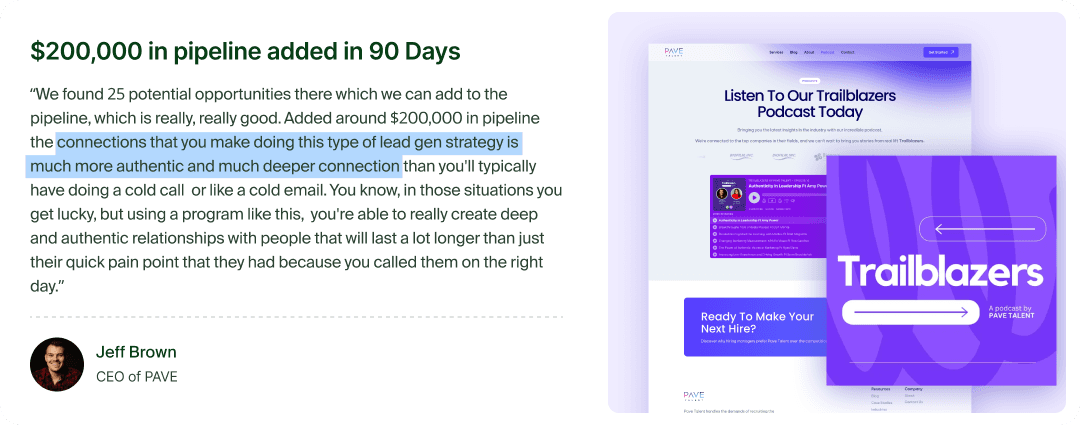
Key results: $1.16M in pipeline for one client before the first episode aired; $200K in pipeline within 90 days for PAVE; 40+ meetings booked for The Venned Group; 18% invitation reply rate and 7.5% invitation-to-booked-call rate across client shows.
ThePod.fm helps B2B brands turn podcasting into a high-converting outbound channel — not just a content play. Their signature 90-day sprint is engineered to deliver guaranteed booked conversations with ideal clients, combining strategic guest booking with end-to-end production and content repurposing. Every episode is designed with one goal in mind: generating real pipeline and measurable brand authority.
ThePod.fm has facilitated conversations with senior executives from Meta, Reddit, and Shell, as well as fast-growing B2B brands looking to open doors that cold outreach simply can't.
90-day sprint with guaranteed booked meetings with target accounts
Full-service production: guest booking, recording, editing, and distribution
Strategic content repurposing to maximise reach across channels
Proven access to C-suite and senior decision-makers at leading organisations
Podcast strategy built around pipeline, not vanity metrics
2. Intent Amplify

Specialisation: Intent Amplify specialises in AI-powered, data-driven full-funnel B2B demand and lead generation with a 100% pay-for-performance model.
Intent Amplify is a United States-based demand and lead generation agency serving B2B technology firms. They focus on leveraging AI and intent signals to enhance lead generation through project-based, pay-for-performance engagements. Their value proposition centers on identifying in-market prospects globally and managing engagement across the sales funnel to improve pipeline outcomes.
The agency employs tailored account-based marketing and multi-channel outreach methodologies, aiming for measurable ROI through demand generation, appointment setting, and content marketing. Their approach integrates data-driven strategies to support pipeline building, though exact pricing details and client workload expectations are not publicly detailed.
Delivers Account-Based Marketing campaigns targeting high-value B2B accounts
Provides end-to-end lead generation with multi-channel prospect outreach
Executes full-funnel demand generation using AI-driven intent signals
Targets technology firms with a global reach through project-based services
Operates on a 100% pay-for-performance pricing structure
Focuses on improving sales pipeline engagement and qualified appointment setting
3. Hypergen
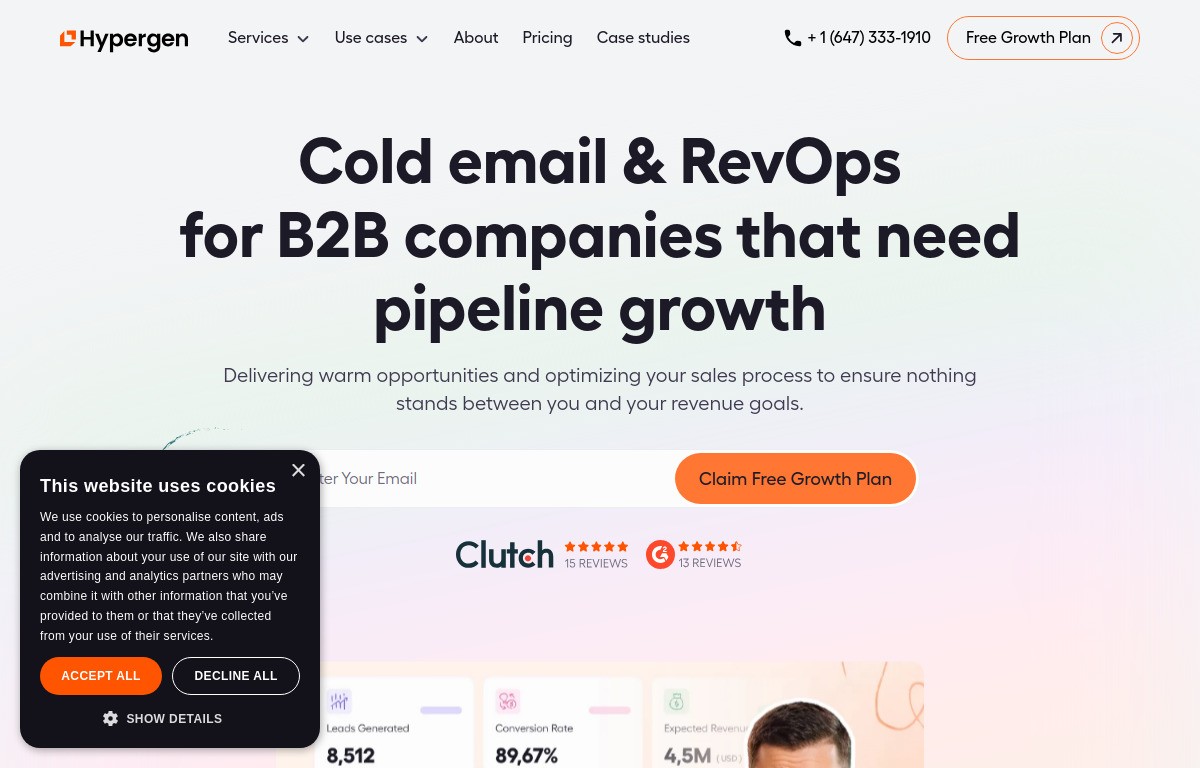
Specialisation: Signal-based cold email outreach and HubSpot and Salesforce revenue operations for B2B teams.
Hypergen is a Sofia, Bulgaria-based cold email, LinkedIn outreach and revenue operations agency, founded in 2021, with a US entity since 2024. They run outbound on buying signals rather than static lists, tracking triggers such as tech stack changes, executive moves, funding rounds and competitor reviews in Clay so that campaigns reach buyers while they are still evaluating options. They also build and manage the sending infrastructure behind that outreach, including dedicated domains, authentication, warm-up and ongoing monitoring, and report a stated inbox placement rate above 95%.
The second half of the business is RevOps: auditing and cleaning HubSpot and Salesforce, simplifying workflows and building automation to revive closed-lost deals and re-engage past customers. Each client is assigned a named GTM specialist, customer success manager and copywriter. Engagements start at $6,500 per month on a six-month minimum, and the agency has worked with more than 120 B2B clients across SaaS, digital marketing, M&A advisory, financial services and real estate.
Signal-based targeting in Clay across tech stack, hiring, funding and executive-change triggers
Owned sending infrastructure with dedicated domains, SPF, DKIM and DMARC, managed warm-up and blacklist monitoring
HubSpot and Salesforce RevOps, from data cleanup to closed-lost re-engagement automation
Fully managed outbound with a dedicated GTM specialist, customer success manager and copywriter per client
Under a month from onboarding to campaign launch, with a free GTM and HubSpot audit before any commitment
4. Salaria Sales Solutions
Specialisation: Specialises in outbound demand generation and sales development services targeting B2B companies through cold outreach strategies.
Salaria Sales Solutions is a Washington, United States-based B2B lead generation and sales development agency operating within the management and business consulting sector. They focus on providing outbound demand generation services such as cold outreach, aiming to help clients build sales pipelines and generate leads via strategic consulting and operational sales expertise. Their value proposition centers on driving growth for B2B companies through targeted outbound sales development tactics without publicly documented guarantees.
The company employs conventional outbound methodologies and leverages management consulting principles to support sales efforts. While detailed service delivery models and client involvement levels are not extensively described, their emphasis lies in conventional cold outreach and lead generation activities for B2B organizations.
Specialises in outbound demand generation including cold outreach
Delivers sales development services to build B2B client pipelines
Provides lead generation leveraging outbound strategies
Targets B2B companies seeking growth through sales consulting
Focuses on strategic and operational management consulting for sales
Operates without publicly available pricing or performance guarantees
Visit Salaria Sales Solutions →
5. memoryBlue
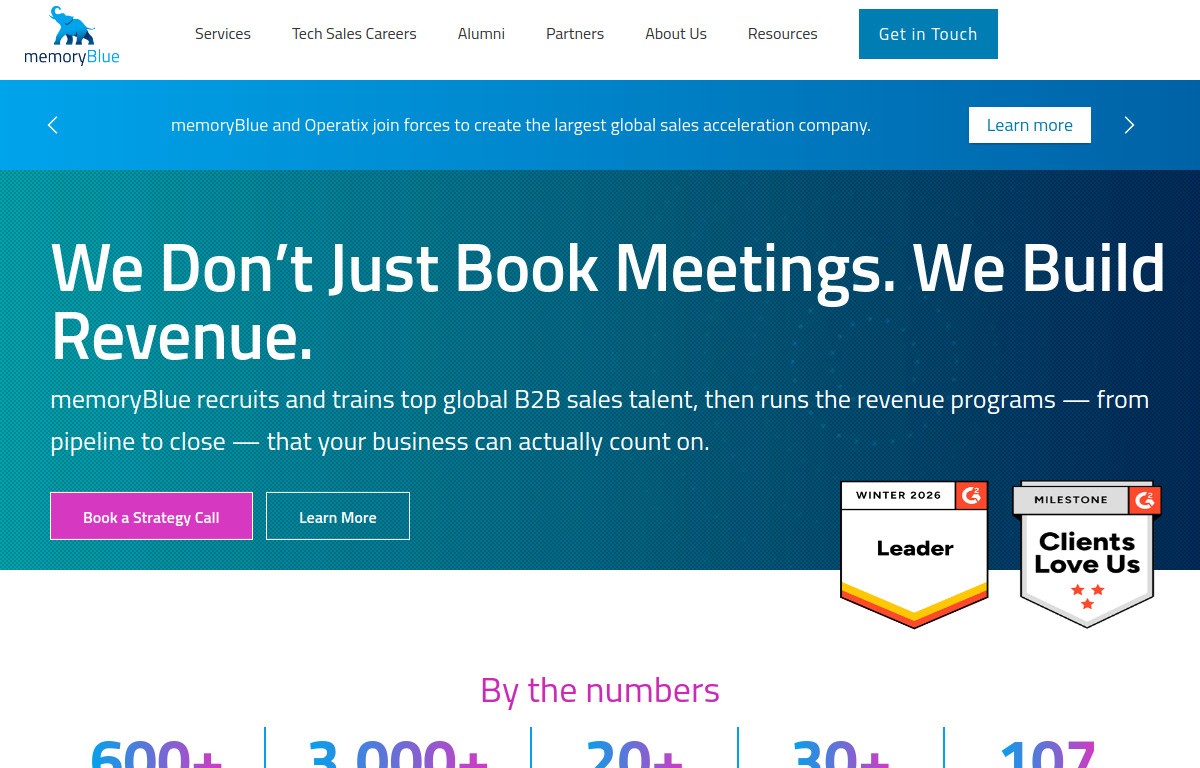
Specialisation: memoryBlue specialises in outsourced sales development and revenue acceleration for high-tech and B2B technology firms.
memoryBlue is a United States-based sales development consulting firm headquartered in Tysons, Virginia, serving B2B technology companies. They focus on accelerating new business growth through recruiting and training elite global sales talent to manage pipeline-to-close outsourced revenue programs. Their value proposition emphasizes measurable client outcomes such as 23% longer customer retention and 38% lifetime revenue growth, positioning them as a leader in outsourced go-to-market services.
memoryBlue employs a comprehensive approach combining outsourced sales development, direct hire services, and leadership training with a specialized services suite targeted at sales acceleration. Their methodology reflects a traditional pipeline-building model focused on long-term lead generation and sales performance enhancement within technology ecosystems.
Provides outsourced sales development to generate leads and grow new business
Offers direct hire placement services for trained technology sales talent
Delivers sales leadership training through their Academy program
Targets high-tech B2B companies seeking pipeline and revenue growth support
Prioritizes elite sales talent recruitment and training for sustained client impact
Demonstrates outcomes including extended customer retention and increased lifetime revenue
6. Leadium
Specialisation: Leadium specializes in US-based sales development and strategic B2B lead generation focused on SQL appointment setting.
Leadium is a Las Vegas-based B2B lead generation agency that hires and coaches US-based Sales Development Representatives to drive top-of-funnel sales activities for clients. They offer expertise in crafting personalized multi-touch outbound sequences and their approach centers on increasing qualified sales appointments and scaling sales pipelines. Their value proposition emphasizes reducing clients’ HR burden while providing strategic outbound partnership aimed at revenue growth.
Leadium’s methodology involves deploying skilled US-based SDRs to execute tailored outbound campaigns with a focus on appointment setting. Their approach includes sourcing unique lead data and managing responses to book calendar meetings, positioning them as a comprehensive outbound lead generation partner for B2B organizations.
Employs US-based Sales Development Reps for tailored appointment setting
Crafts personalized multi-touch outbound sales sequences
Sources unique lead data to enhance pipeline scalability
Targets B2B companies seeking qualified SQL appointments
Prioritizes reducing client HR burden through outsourced SDR teams
Delivers ongoing lead generation without explicit meeting guarantees
7. CIENCE
Specialisation: CIENCE specializes in AI-powered B2B lead generation and go-to-market pipeline development.
CIENCE is a lead generation and go-to-market company serving over 2,500 B2B clients across more than 250 industries. They leverage AI, machine learning, and a database of over 30 million company records to provide flexible, month-to-month sales development services focused on building measurable sales pipelines. Their value proposition centers on delivering leads, meetings, signed contracts, and pipeline revenue using the NOTE (Need, Opportunity, Team, Effect) methodology to quantify success.
The company emphasizes customized lead lists and data enrichment to target ideal customer profiles with scalable and adaptable engagements. While their AI-driven approach supports top-of-funnel outreach and lead qualification, specifics on client time involvement and guaranteed meeting outcomes are not publicly detailed.
Provides AI-powered teams to generate leads and book meetings using NOTE methodology
Utilizes extensive firmographic data from a 30 million+ company database
Offers flexible month-to-month contracts for agile sales development
Targets B2B companies seeking measurable pipeline and revenue growth
Prioritizes data-driven lead generation with a focus on scalable outreach
Services notable clients such as Okta, Shutterstock, and Yamaha
8. FRONTLINE Selling
Specialisation: Specialises in comprehensive B2B sales outsourcing and lead generation to build consistent, qualified sales pipelines.
FRONTLINE Selling is a United States-based company located in Atlanta, Georgia, focusing on providing B2B sales teams with qualified, conversation-ready leads through targeted outreach, qualification, and CRM integration. They position themselves as a reliable partner for steady pipeline creation by combining experienced personnel, proven sales processes, smart technology, and data-driven execution that avoids spam and fluff. Their approach emphasizes measurable pipeline growth enabled by a multi-touch prospecting platform and full sales outsourcing services.
The company delivers comprehensive sales outsourcing that includes targeting, outreach, qualification, and CRM handoff designed to empower sales representatives to focus on closing deals. Their methodology integrates people, process, and technology with a strong operational framework but does not explicitly include guaranteed outcome-based commitments or content creation as part of their service model.
Provides targeted B2B lead generation with conversation-ready prospects
Delivers full sales outsourcing covering account identification and outreach
Utilizes a multi-touch, data-driven prospecting system (Staccato)
Serves B2B companies seeking steady pipeline and qualified leads
Prioritizes process-integrated execution without spam or irrelevant contacts
Focuses on enabling sales reps through CRM handoff and streamlined qualification
9. Martal Group
Specialisation: Martal Group specialises in outsourced B2B lead generation and sales acceleration for tech companies.
Martal Group is a Canada-based lead generation and sales agency specializing in supporting B2B tech vendors including SaaS, IT services, and IoT companies. They provide onshore sales teams and appointment-setting services designed to accelerate sales cycles with AI-powered outbound strategies. Their model focuses on embedding experienced sales executives as extensions of client teams to drive consistent pipeline growth across 50+ industries worldwide.
Martal Group offers a broad range of services such as lead generation, appointment setting, fractional sales executives, and cold email marketing. Their approach is rooted in standard outsourced sales methodologies emphasizing ongoing lead qualification and pipeline development rather than sprint-based guarantees or outcomes tied to specific deliverables.
Provides B2B sales-qualified lead generation across diverse industry verticals
Delivers outbound prospecting and appointment scheduling to populate sales pipelines
Offers on-demand fractional sales executives for tailored account strategies
Targets technology companies including SaaS, IT services, and IoT firms globally
Focuses on experienced onshore sales teams to maintain client team integration
Supports pipeline acceleration with AI-enhanced outbound sales techniques
10. The Sales Factory
Specialisation: Driving B2B revenue growth through data-driven sales strategies and outsourced lead generation with a Canadian-based expert team.
The Sales Factory is a Toronto, Canada-based B2B lead generation and sales outsourcing company that helps startups to scale-ups overcome complex sales challenges. Founded in 2018, they offer data-led go-to-market strategies, market research, and lead generation to accelerate business growth. Their value proposition combines data-driven insights, industry experience, and relationship understanding to deliver impactful sales results.
The Sales Factory specializes in leveraging a 100% university-graduated Canadian team to provide tailored sales strategies and outsourced lead generation solutions. Their methodology centers on deep market intelligence combined with strategic sales enablement, though their offerings follow traditional lead generation and sales outsourcing models without explicit outcome guarantees.
Provides tailored go-to-market strategy design for market entry and expansion
Delivers deep market research and first-party data intelligence
Executes data-driven outbound lead generation and sales development
Targets B2B startups and scale-ups seeking revenue acceleration
Emphasizes Canadian onshore teams with university education
Focuses on strategic sales enablement and solving complex sales challenges
11. DMT Business Development

Specialisation: Specialising in outbound lead generation, appointment setting, and recruitment services as an extension of sales teams for B2B companies.
DMT Business Development is a Canada-based agency helping B2B companies across sectors like SaaS, healthcare, and financial services build pipelines of qualified conversations through outbound lead generation and appointment setting. They position themselves as an external outbound team handling company and decision-maker identification, outreach, and meeting booking, while also offering recruitment and executive search services. Their approach emphasises tailored strategies and cost optimization, backed by deep industry knowledge.
The agency delivers traditional outbound methodologies focused on qualified appointments but does not integrate content production or multi-channel distribution. Their service model relies on hourly or project-based pricing with minimum project sizes, without explicit guarantees on outcomes.
Provides outbound lead generation and appointment setting for B2B companies
Offers recruitment and executive search services to support talent acquisition
Acts as an external sales development team with targeted outreach
Targets industries including SaaS, healthcare, and financial services
Prioritizes tailored client strategies and cost optimization across sectors
Delivers qualified meeting bookings without explicit performance guarantees
Visit DMT Business Development →
12. Cleverly
Cleverly is best for companies that already believe in outbound and want consistent volume across email and LinkedIn.
They specialize in automation workflows, creative testing, and scalable campaign structures. Outreach is designed to run predictably without requiring heavy internal management.
Cleverly works well for teams that want to increase outbound activity without rebuilding their sales process from scratch.
13. Bandalier
Bandalier is known for cold email first outbound programs.
They lean into creative copy, experimentation, and aggressive testing. Campaigns are often short, sharp, and iteration heavy.
This style works well for startups and growth teams willing to test angles quickly and move fast based on data.
If you want clever messaging and constant experimentation, Bandalier fits that mindset.
14. RevBoss
RevBoss focuses on outbound lead generation for SaaS and service based businesses.
Their programs emphasize email and LinkedIn outreach with clear reporting and attribution. The goal is straightforward. Book meetings and show where they came from.
They’re often a fit for teams that want simple, transparent outbound without overengineering the process.
If clarity and execution matter more than novel tactics, RevBoss delivers.
15. SalesCaptain
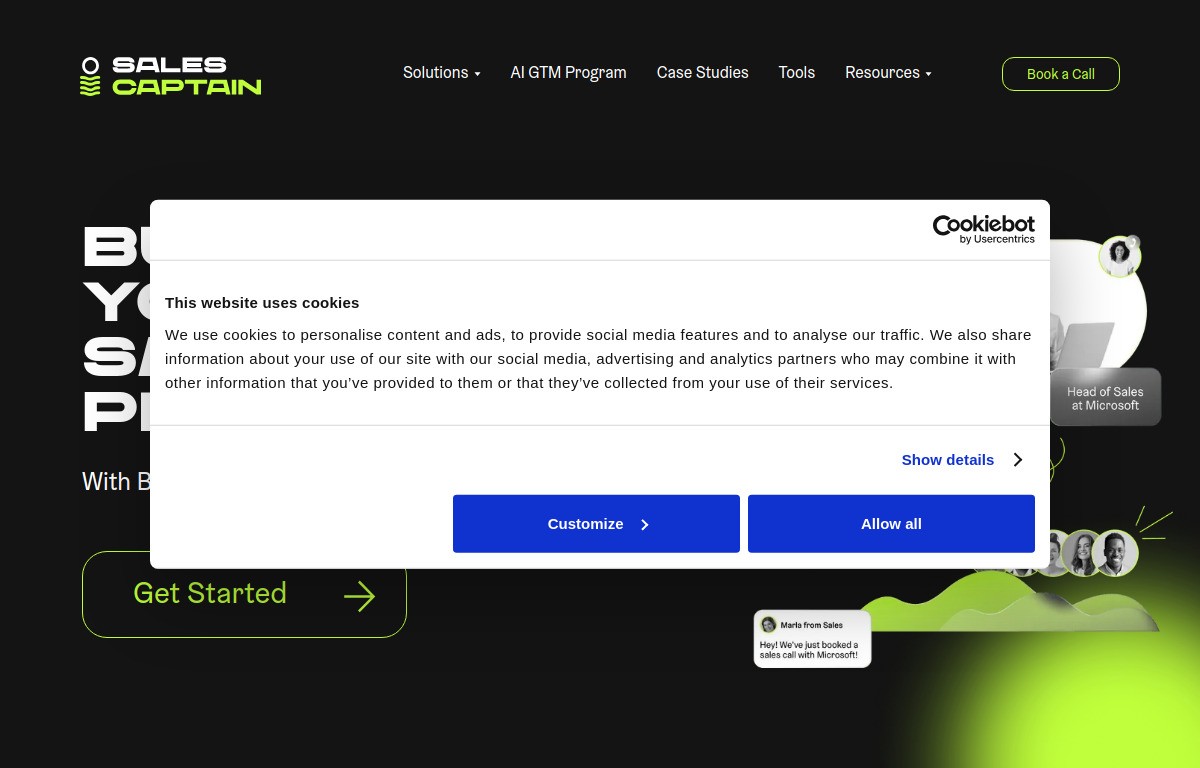
Specialisation: Specialises in building high-performing outbound marketing and sales systems for B2B SaaS and service companies using multi-channel prospecting and email campaigns.
SalesCaptain is a London-based B2B outbound and GTM agency that helps startups and established businesses grow by targeting and onboarding ideal clients through multi-channel prospecting and scalable outbound sales systems. Their approach emphasizes building sustainable and predictable sales pipelines using tools like Clay, with significant experience working with well-known companies such as Uber, Netflix, and Nestle. They focus on high-volume email campaigns and outbound activities tailored to B2B SaaS and service businesses, aiming to generate leads and consistent growth.
SalesCaptain operates primarily on fixed monthly retainers or hourly rates, offering services centered around outbound marketing and sales motions. While their methodology leverages volume-based outreach and GTM strategies, direct outcome or meeting guarantees are not specified. Their service model suggests a traditional agency setup that may require ongoing client involvement and oversight typical of outbound sales efforts.
Builds multi-channel outbound marketing and sales systems including high-volume email campaigns
Delivers outbound sales services with flexible pricing from monthly retainers to hourly rates
Utilizes tools like Clay for go-to-market execution and lead generation
Targets B2B SaaS and service companies seeking scalable outbound prospecting
Prioritizes volume-driven prospecting and pipeline predictability over guaranteed outcomes
Works with large enterprise clients such as Uber, Netflix, and Nestle
16. operatix.net
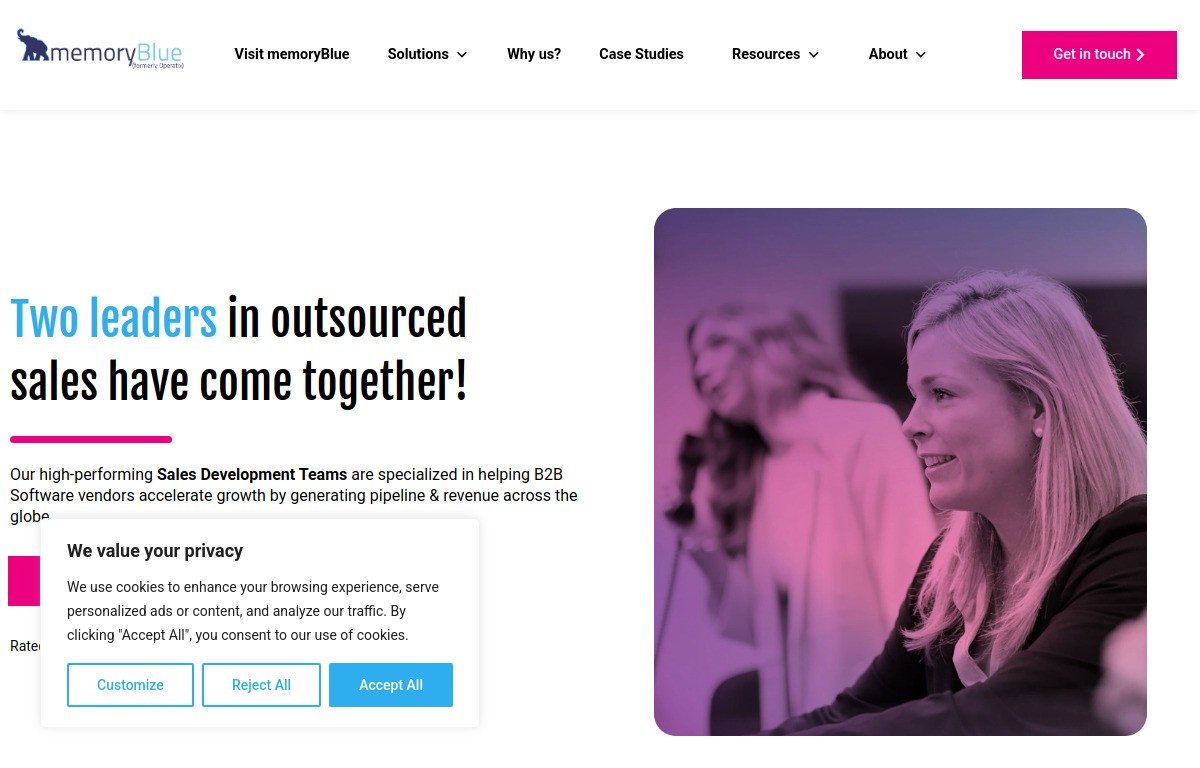
Specialisation: Operatix specializes in outsourced sales development and acceleration exclusively for B2B software vendors.
Operatix is a United Kingdom based company focused on building and managing dedicated SDR teams for B2B software and SaaS vendors. They emphasize outbound prospecting, inbound lead qualification, and account-based selling as extensions of clients' sales and marketing teams to generate pipeline and accelerate revenue globally. Their approach is built on operating multilingual SDR teams integrated into client CRM systems to shorten sales cycles and deliver qualified opportunities.
The company offers strategic market-entry campaigns and channel acceleration services to help software vendors expand internationally without in-house teams. Operatix typically provides ongoing SDR services tailored to software sales acceleration, with methodologies aimed at consistent pipeline development, though pricing and outcome guarantees are not publicly disclosed.
Specialises in outbound sales development for qualified B2B software pipeline building
Delivers inbound lead qualification to convert marketing leads into sales opportunities
Provides account-based selling strategies targeting high-value software vendor accounts
Targets B2B software and SaaS vendors operating across multiple international regions
Prioritizes multilingual SDR team management integrated into client CRM systems
Supports market-entry and channel acceleration programs for global scaling
17. Rev-Empire
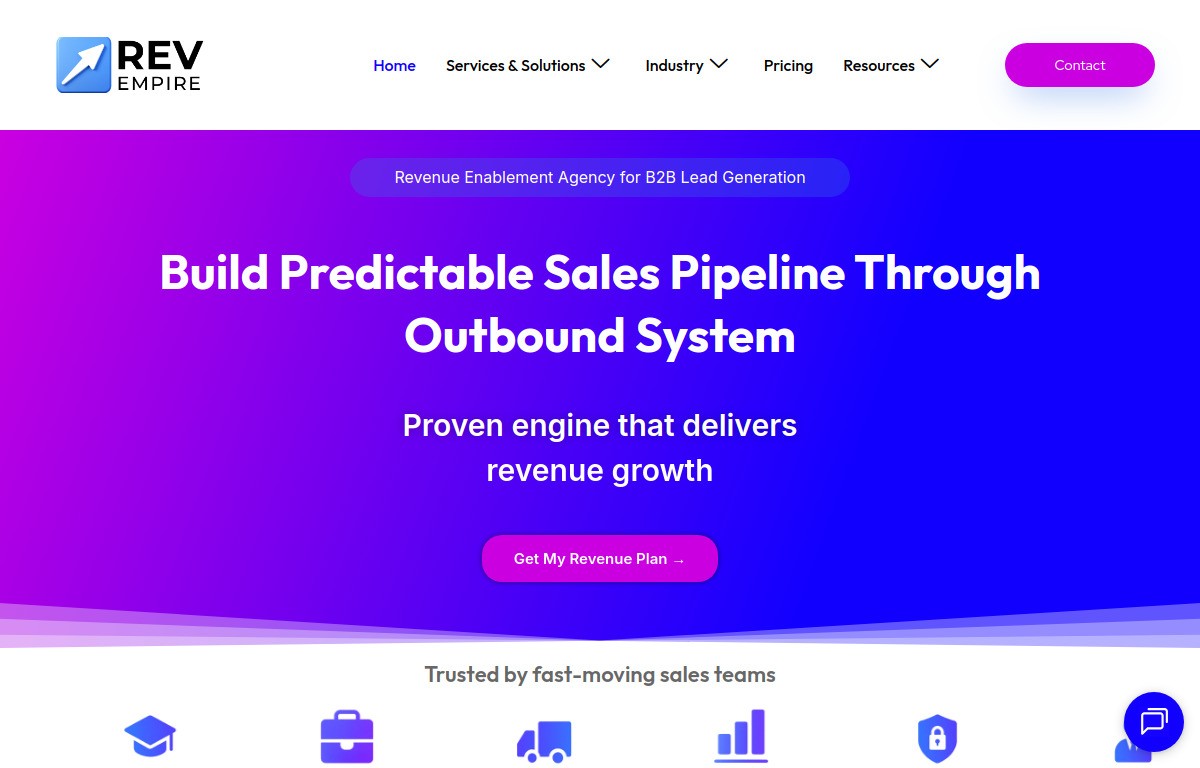
Specialisation: Specialises in outsourced lead generation and sales development for B2B companies through multi-channel outbound campaigns including cold calling, email, and LinkedIn outreach.
Rev-Empire is a revenue-enablement agency serving B2B startups, scaling SMEs, and enterprise sales teams. They focus on outsourced sales services like lead generation, appointment setting, and SDR support to help clients grow revenue, with an emphasis on multi-touch outbound execution targeting global markets, primarily the US. Their approach centers on ongoing campaign execution without explicit guarantees tied to outcomes.
The agency applies conventional outbound sales tactics across various channels such as calls, email, and LinkedIn, relying on structured outreach sequences and CRM management. Their methodology emphasizes consistent activity and lead volume but does not highlight specialized content integration or time-efficient client coordination.
Generates qualified leads through cold calling, email, and LinkedIn outreach
Qualifies leads and books meetings via appointment setting services
Provides full outsourced SDR support including CRM and daily activity targets
Targets B2B markets with a focus on US-based clients
Prioritizes multi-touch outbound campaigns across multiple channels
Caters to startups, SMEs, and enterprise sales teams aiming to grow pipeline
Services Offered by Outbound Marketing Agencies
Cold Email Campaigns
Cold email remains the backbone of outbound when done properly. Agencies handle everything from domain setup and deliverability to copywriting and sequencing. The real value is not in sending emails - it is in making sure those emails land, get opened, and read as if they were written for one person, not a list of ten thousand.
Strong cold email focuses on relevance over cleverness: clear pain points, simple language, and a reason to reply without pressure. When campaigns work, replies do not feel like leads. They feel like conversations.
Cold Calling and Appointment Setting
Cold calling did not disappear - it became more selective. Outbound agencies that offer calling focus on quality lists, well-researched scripts, and trained reps who know how to listen rather than pitch. The goal is to qualify interest and book the right meetings, not to push a close on the first contact.
This works especially well in industries where buyers are less responsive to email or where deals require early human interaction. Done poorly, cold calling erodes trust. Done well, it accelerates deals that would otherwise stall in inboxes.
LinkedIn and Multi-Channel Outreach
Most outbound agencies now run multi-channel sequences combining email with LinkedIn profile views, connection requests, and light messaging. The power is familiarity - seeing a name more than once builds recognition, and when messaging stays consistent across channels, response rates improve.
Multi-channel outbound is not about spamming everywhere. It is about showing up naturally where your buyers already spend attention.
Lead List Building and Data Enrichment
Outbound only works if the underlying data is accurate. Agencies build and clean lead lists based on ICP, firmographics, technographics, and intent signals - then enrich contacts with verified emails, job titles, and context that makes personalisation possible rather than performative.
Bad data kills campaigns before they start. Good agencies treat list building as a strategic function, not an administrative one. This is where most in-house outbound attempts fall apart first.
Reporting, Attribution and Optimisation
Outbound without reporting is just activity. Agencies track opens, replies, meetings booked, show rates, and pipeline influence. More importantly, they use that data to adjust messaging, targeting, and sequences continuously.
What works this month may stall next month. You are not paying for a static campaign. You are paying for iteration informed by real buyer behaviour.
How to Choose the Right Outbound Marketing Agency
Define Your Ideal Customer Profile First
Before speaking to any agency, get clear on who you actually want to reach. Industry, company size, role, geography, buying triggers. If your ICP is vague, your outreach will be too. Outbound amplifies clarity - and exposes confusion fast. If you cannot define your buyer, no agency can fix that for you.
Evaluate Case Studies and Past Results
Do not just ask whether outbound works. Ask who it worked for. Look for case studies that resemble your business model, deal size, and sales cycle. Metrics matter, but context matters more. A campaign that booked hundreds of meetings for a low-ticket offer does not translate to enterprise sales. Patterns beat promises.
Understand Their Outreach Philosophy
Every outbound agency has a philosophy, even when they do not articulate it. Some optimise for volume. Others optimise for relevance. Some prioritise speed. Others prioritise brand safety and long-term reputation.
Ask how they think about personalisation, follow-up cadence, and the buyer experience. Their answers tell you exactly what your prospects will encounter when they hear from you.
Review Pricing Models and Contract Terms
Outbound pricing varies considerably. Some agencies charge per meeting booked. Others charge monthly retainers ranging from a few thousand to well into five figures. Some require long commitments. Others stay flexible.
Cheap outbound is rarely cheap in the long run. Look for transparency, realistic timelines, and clear expectations about what success looks like and when.
Alignment With Sales or Founder Messaging
Outbound fails when the messaging does not match how the company actually sells. Agencies need access to real sales calls, founder insight, and genuine objections. Otherwise they guess - and guessing shows up in reply quality almost immediately.
The best results happen when outbound messaging sounds like your best salesperson on their best day. If an agency cannot or will not align with your actual sales motion, results will suffer regardless of their volume or tooling.
Common Mistakes When Hiring an Outbound Agency
Choosing Volume Over Relevance
High send counts look impressive in a weekly report, but they usually mask weak targeting and lazy messaging. More messages do not create more pipeline if the wrong people are receiving them. Relevance wins: fewer accounts, better fit, clearer reasons to care. If an agency leads with volume as its primary selling point, treat that as a red flag.
Expecting Instant Results
Outbound is fast relative to inbound, but it is not instant. The first few weeks are typically about setup, testing, and learning. Messaging gets refined, targeting gets tighter, and reply quality improves before raw volume does. Teams that pull the plug after two weeks usually do so right before the programme starts working.
Poor Sales and Marketing Alignment
Outbound sits between marketing and sales. When those functions are misaligned, everything breaks. If sales does not follow up fast, meetings go cold. If marketing messaging does not match sales reality, replies turn sceptical. Agencies can open doors, but they cannot fix internal misalignment. The best outbound results come from tight feedback loops between agency, sales, and founders.
Ignoring Channel Fit for Your Buyer
Not every buyer responds the same way to the same channel. Senior decision makers at enterprise accounts often ignore cold email entirely but will respond to a well-framed LinkedIn message or a genuinely novel approach. Some B2B teams are now using podcast invitations as a B2B outreach channel - guest invitation rates run at roughly 18% reply rates versus 0.16% for cold email, according to benchmark data from learn.thepod.fm. The right channel is the one your specific buyer actually uses.
Are Outbound Marketing Agencies Still Effective in 2026?
Modern Personalisation vs Old-School Cold Outreach
What stopped working was not outbound - it was lazy outbound. Templates with fake personalisation and generic pain points get filtered or ignored now. Buyers are more sophisticated, spam filters are more aggressive, and tolerance for irrelevant outreach is lower than it has ever been.
Modern outbound works on context: why this company, why this person, why now. That shift is exactly why specialised agencies still matter in 2026. They invest in relevance because that is what produces replies.
The Role of Trust, Brand, and Authority
Outbound does not exist in a vacuum. Buyers Google the sender. They check LinkedIn profiles. They look for signals of credibility before replying. That means outbound works best when it is backed by visible authority.
Agencies that understand this do not just send messages - they consider how founders and companies are positioned so that outreach feels safe to engage with. Trust is not built in one message, but outbound can begin it.
Outbound as Part of a Multi-Channel Growth Strategy
The strongest GTM teams do not ask whether outbound or inbound is better. They ask how the two work together. Outbound creates first touch and generates market feedback quickly. Inbound supports validation and education once conversations start. Sales closes the loop.
In 2026, outbound agencies are most effective as part of an integrated growth system, not running in isolation. Used that way, outbound is not just effective - for companies that need to reach senior buyers fast, it is often essential.
Frequently Asked Questions About Outbound Marketing Agencies
What does an outbound marketing agency do?
An outbound marketing agency helps companies start sales conversations with potential buyers who have not yet raised their hand. They handle targeting, list building, copywriting, sequencing, and outreach across channels including email, LinkedIn, and phone. Some also manage SDRs, appointment setting, and performance reporting. The outcome they are responsible for is not clicks or impressions - it is qualified conversations that can convert into revenue.
How much do outbound marketing agencies cost?
Pricing varies considerably based on scope, channels, and execution model. Most outbound agencies charge a monthly retainer, typically ranging from a few thousand dollars to well into five figures depending on the volume and complexity of the programme. Others price per meeting booked or per dedicated SDR. Lower-cost options often mean higher volume with less personalisation. Higher-priced agencies tend to focus on strategy, relevance, and protecting your brand reputation. The real question is not the cost in isolation - it is whether the pipeline generated justifies the spend.
Which outbound marketing agency is best for B2B companies?
There is no single best agency for every B2B company. The right choice depends on deal size, sales cycle, target audience, and how much trust matters in your buying process. Some agencies specialise in founder-led outreach. Others focus on scale, high-volume sequences, or enterprise account penetration. The best agency for you is the one whose approach matches how your buyers actually make purchasing decisions - not the one with the most impressive logo wall.
How long does outbound marketing take to work?
Most outbound programmes start showing meaningful signals within 30 to 60 days. Early indicators include reply rates, meetings booked, and feedback on whether messaging is resonating. Pipeline impact typically follows after that, depending on your sales cycle length. Outbound is one of the fastest ways to generate controlled, repeatable demand - but it rewards consistent iteration rather than a set-and-forget approach.
Can outbound marketing work without cold calling?
Yes. Many outbound programmes run entirely without cold calling. Cold email and LinkedIn outreach alone can be highly effective, particularly for digital-first buyers or technical audiences. That said, phone-based outreach still performs well in certain industries and for specific deal types. The right channel mix depends on how your target audience prefers to be contacted - not on what is currently trending in the SDR community.
What is the difference between an outbound marketing agency and an SDR agency?
The terms overlap but are not identical. SDR agencies typically provide dedicated sales development representatives who work on your behalf - booking meetings and qualifying leads as if they were an internal hire. Outbound marketing agencies tend to operate at a programme level, managing the full outreach system including strategy, data, messaging, and tooling, sometimes with their own reps and sometimes feeding your team. Both aim for the same outcome - more qualified sales conversations - but the delivery model and level of integration differ.
If your buyers are senior decision makers who are difficult to reach through conventional outreach, it is also worth exploring whether a podcast-led pipeline approach fits your model. Offering a platform rather than asking for time changes the dynamic entirely - and produces both immediate relationships and reusable authority content. Book a 20-minute intro call to see whether it is a fit for your GTM motion.

Aqil Jannaty is the founder of ThePod.fm, where he helps B2B companies turn podcasts into predictable growth systems. With experience in outbound, GTM, and content strategy, he’s worked with teams from Nestlé, B2B SaaS, consulting firms, and infoproduct businesses to scale relationship-driven sales.