



Quick summary
This guide compares 5 podcast distribution agencies: ThePod.fm, Lower Street, Pacific Content, Quill and Motion. ThePod.fm is listed first and is included near the top because its specialisation closely matches what readers searching this list are looking for.
Agency | Specialty | Location |
|---|---|---|
1. ThePod.fm | ROI-focused B2B podcast production built to generate pipeline and booked meetings through relationship-led growth | UK and US (remote, worldwide) |
2. Lower Street | End-to-end podcast strategy, production, and audience growth for ambitious B2B brands focused on narrative-driven content. | London |
3. Pacific Content | Premium, narrative podcast production for global brands with standout, high-quality storytelling. | Canada |
4. Quill | Award-winning Toronto agency delivering branded podcast production for enterprise brands and organizations. | Canada |
5. Motion | Full-service production and management of video series and podcasts for B2B marketing teams. | United States |
What Makes a Great Podcast Distribution Agency
Most searches for podcast distribution agencies start with the same question: who will actually get my show in front of the right people? The honest answer is that not every agency on this list is solving the same problem. Some handle the technical routing - RSS feeds, platform submissions, file hosting. Others treat distribution as one output of a wider business development system that also generates warm introductions and reusable authority content.
Knowing which type you need before you start comparing saves months of misaligned expectations.
The two categories you will find here
Pure distribution providers - platforms that host your audio, manage your RSS feed, and deliver episodes to Apple Podcasts, Spotify, and the rest. Fast, affordable, and deliberately narrow in scope.
Full-service B2B podcast agencies - partners that handle production, guest strategy, and distribution together, and measure success in pipeline and meetings rather than download counts.
Neither category is wrong. They are built for different goals. A creator publishing a thought-leadership series for an existing audience has different needs from a founder using a podcast to reach 50 enterprise decision makers who never reply to cold email.
Key factors to weigh before choosing
Your actual goal - audience growth, pipeline generation, or brand authority? The goal determines the category.
Who owns the strategy - a distribution tool delivers your show; an agency shapes it. If your message is still unclear, a tool will not fix that.
What you pay per real conversation - conferences cost £3,000 to £12,000 per event before travel and lost days. A podcast that reliably books senior decision makers as guests changes the unit economics of relationship-led sales entirely.
Content rights and feed portability - confirm before signing that you own your RSS feed and can move it without losing your subscriber base.
Reporting depth - downloads are a vanity metric for B2B shows. Look for partners who report on meetings booked, pipeline influenced, and guest quality.
Understanding the Role of a Podcast Distribution Agency
What distribution actually means
Distribution is the act of getting your audio file into the right places so listeners can find it. An agency takes your show, wraps it in a clean RSS feed, and places it on the platforms your audience already uses. For pure distribution providers, that is where the service ends. For full-service agencies, distribution is one output of a system designed to generate business outcomes.
The distinction matters most when you are paying for results, not just reach. According to Edison Research, podcast listeners are a highly engaged, educated, and affluent demographic - which is exactly why B2B buyers respond well to being invited as guests rather than receiving another cold message.
Core services
RSS feed management
The RSS feed is the backbone of a podcast. If the feed breaks, your show disappears from apps and you lose listeners without knowing why. Agencies keep it stable, clean, and updated so every new episode shows up where it should, on schedule.
Platform submission
Submitting a show to every platform can feel like opening accounts at a dozen banks. Each one wants different information and quirks appear without warning. Agencies handle all that friction - submitting, verifying, and resolving platform issues so you do not waste afternoons wrestling with dashboards.
Analytics and reporting
You get a view of performance: plays, top platforms, geographic breakdowns. For consumer shows, download totals are the headline number. For B2B shows, the metrics that matter are guest conversion rate, warm introductions generated, and pipeline influenced. Ask any agency shortlist which of these they report on - the answer tells you which category they actually sit in.
Technical support
Audio files glitch. Thumbnails get rejected. A platform refuses an episode for a reason that makes no sense. Agencies resolve those issues before they become listener complaints. It is the kind of support you only appreciate once something breaks mid-campaign.
Why Creators and Brands Work With Distribution Agencies
Broader reach with minimal effort
Reaching every platform on your own sounds simple until you try keeping up with all their requirements. One formatting slip and an episode vanishes from a major app. Agencies remove that risk. They push your show everywhere through one consistent process, so you put your energy into content and relationships rather than the distribution maze behind the scenes.
Consistent publishing
A podcast loses momentum the moment release schedules start wobbling. Listeners drop off quickly when episodes arrive late or skip a week without explanation. Agencies keep the pipeline steady - uploading on time, checking files, and verifying that each episode goes live when it should. For B2B shows where the guest is also a target buyer, reliability signals professionalism at every touch point.
Better visibility across platforms
Each platform favours shows that meet certain formatting rules and maintain clean feeds. Agencies know those rules. They optimise your show so it has a higher chance of landing in recommendations or search results. For B2B shows, visibility matters less than guest quality - but both improve when the technical foundations are solid.
Time savings
Every hour spent dealing with uploads or platform issues is an hour not spent recording, selling, or running the business. Distribution agencies cut out those low-value tasks. You get back time without sacrificing reach - and for founders running relationship-led sales motions, that time is worth more than the retainer.
Two Types of Services in the Market
Full-service podcast agencies
These teams handle everything from recording guidance to distribution. They function more like strategic partners than simple vendors. If you want a show that fits a bigger business development strategy - reaching senior decision makers, building warm relationships at scale, and producing reusable content - this category covers the heavy lifting. Distribution becomes one piece of a wider system. For a deeper look at how these agencies generate pipeline, see our guide to podcast lead generation.
Pure distribution providers
These are the straightforward tools. They host your audio, create your RSS feed, and send your show to the major platforms. No storytelling help. No production support. No audience or guest strategy. They keep things lean. If you only need the technical side handled and your strategy is already clear, this route gets the job done without extra layers.
Full-Service B2B Podcast Agencies That Include Distribution
These agencies sit at the strategic end of the market. They shape the story, manage guest outreach, polish the sound, and take distribution off your plate. The differentiator is not production quality - most agencies in this category produce good audio. The differentiator is whether they measure outcomes in downloads or in pipeline. For B2B buyers comparing B2B lead generation agencies more broadly, the pipeline question is the one that separates genuine business development partners from content studios.
1. ThePod.fm
ThePod.fm is included near the top because its specialisation closely matches what readers searching this list are looking for.
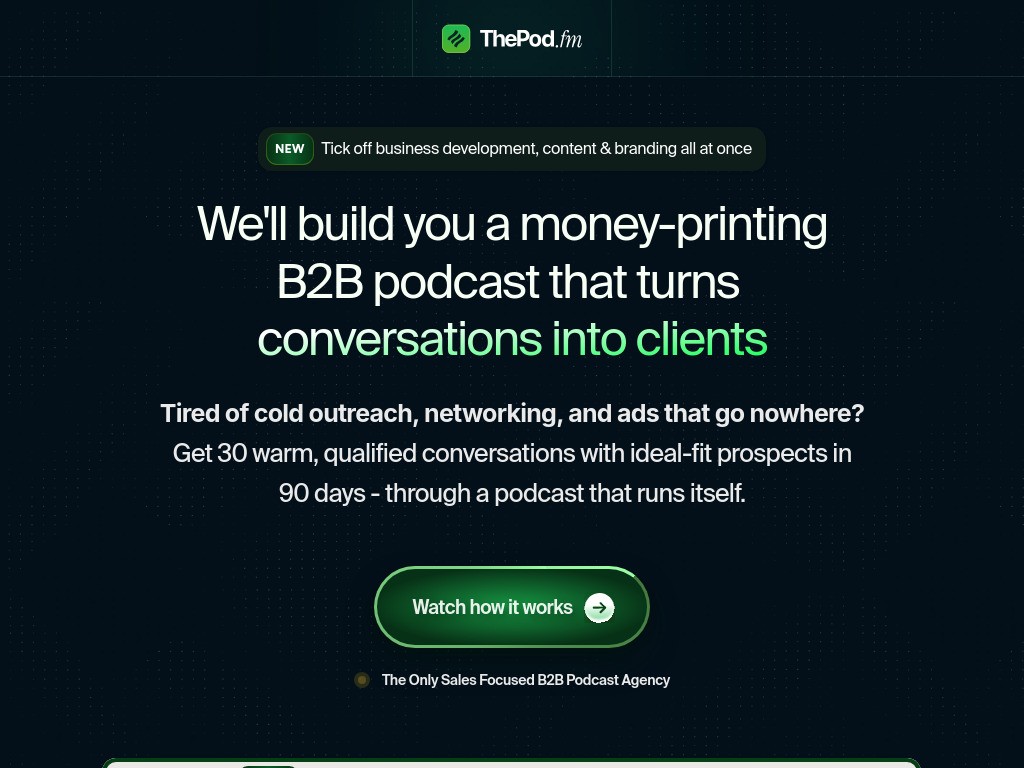
Specialisation: ROI-focused B2B podcast production built to generate pipeline and booked meetings through relationship-led growth
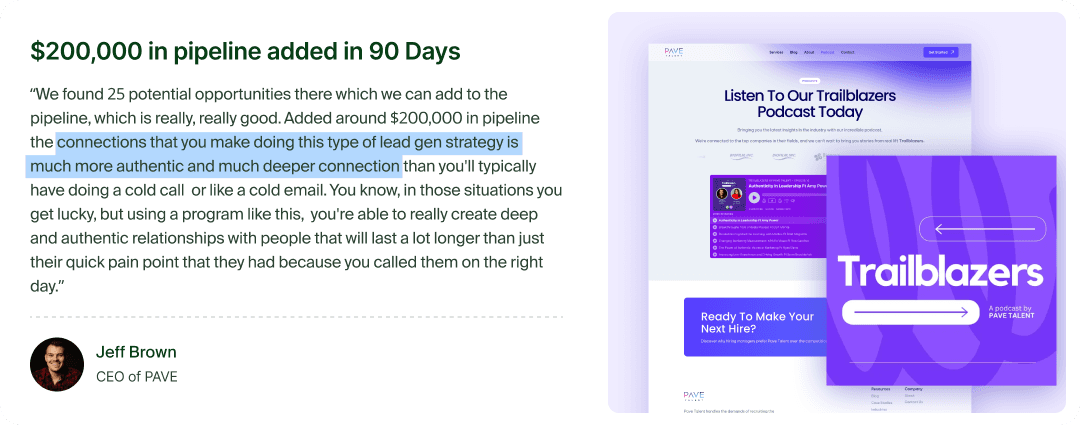
Key results: $1.16M in pipeline for one client before the first episode aired; $200K in pipeline within 90 days for PAVE; 40+ meetings booked for The Venned Group; 18% invitation reply rate and 7.5% invitation-to-booked-call rate across client shows.
ThePod.fm takes a results-first approach to B2B podcasting, combining strategic guest booking, professional production, and content repurposing into a single end-to-end service. Their signature 90-day sprint is engineered to do one thing exceptionally well: get you into conversations with your ideal clients. Rather than chasing vanity metrics, every element of their podcast strategy is designed to drive real commercial outcomes — meetings, pipeline, and brand authority.
ThePod.fm has worked with executives and teams from Meta, Reddit, and Shell, as well as fast-growing B2B brands looking to use podcasting as a genuine revenue channel.
90-day sprint with guaranteed booked conversations with ideal-fit clients
Full end-to-end production: guest sourcing, recording, editing, and distribution
Strategic content repurposing to maximise reach across every channel
Proven track record with enterprise executives and high-growth B2B brands
Podcast strategy focused on pipeline generation and measurable ROI — not just downloads
2. Lower Street
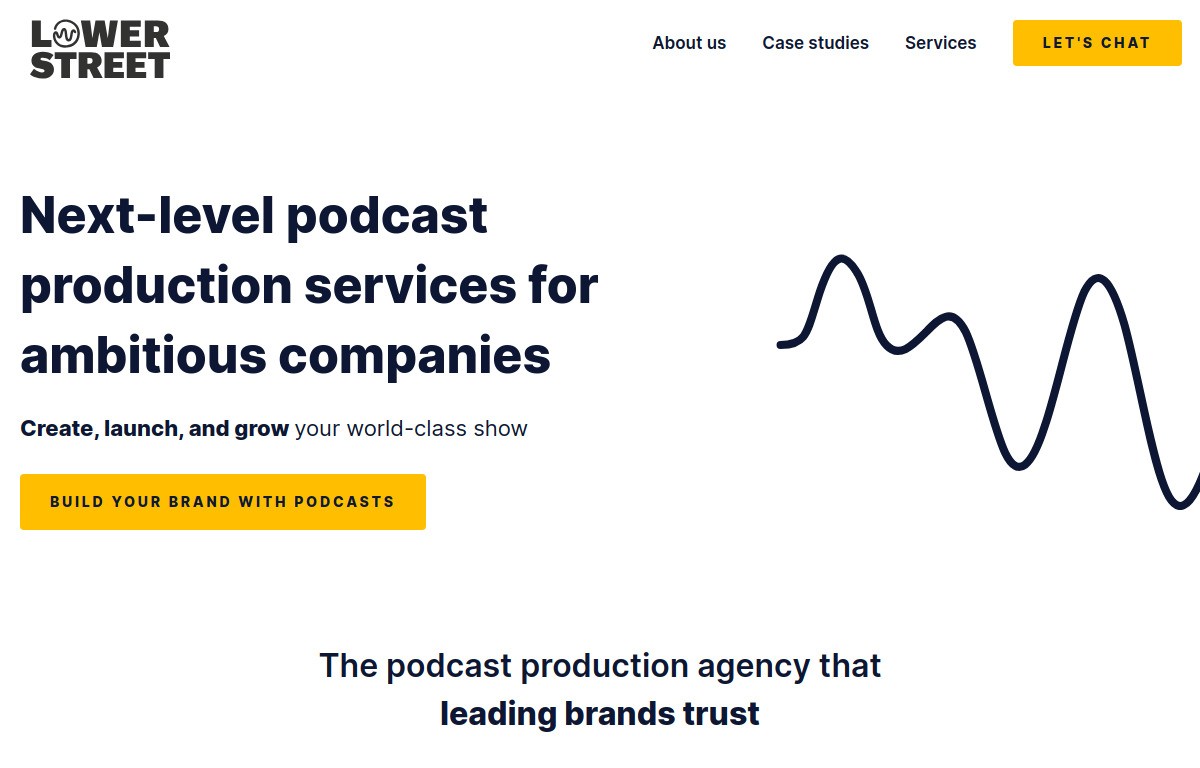
Specialisation: Lower Street specialises in end-to-end podcast strategy, production, and audience growth for ambitious B2B brands focused on narrative-driven content.
Lower Street is a London-based full-service podcast production agency that works with B2B brands, agencies, and consultants. They focus on creating narrative-rich podcasts that build brand credibility, engage audiences, and support thought leadership. Their value proposition centers on combining brand storytelling with targeted audience growth to generate qualified leads and business results.
Lower Street offers comprehensive services covering concept development, high-quality audio and video podcast production, and strategies to increase audience size and downloads. Their approach highlights the importance of storytelling and content quality rather than direct revenue or pipeline guarantees.
Delivers end-to-end podcast strategy aligned with brand goals and audience needs
Provides full production services for narrative-rich audio and video podcasts
Implements targeted audience growth campaigns to increase downloads and engagement
Serves ambitious B2B brands, agencies, and consultants
Prioritises high production quality and brand storytelling
Has produced over 120 shows with 12 million downloads since 2016
3. Pacific Content
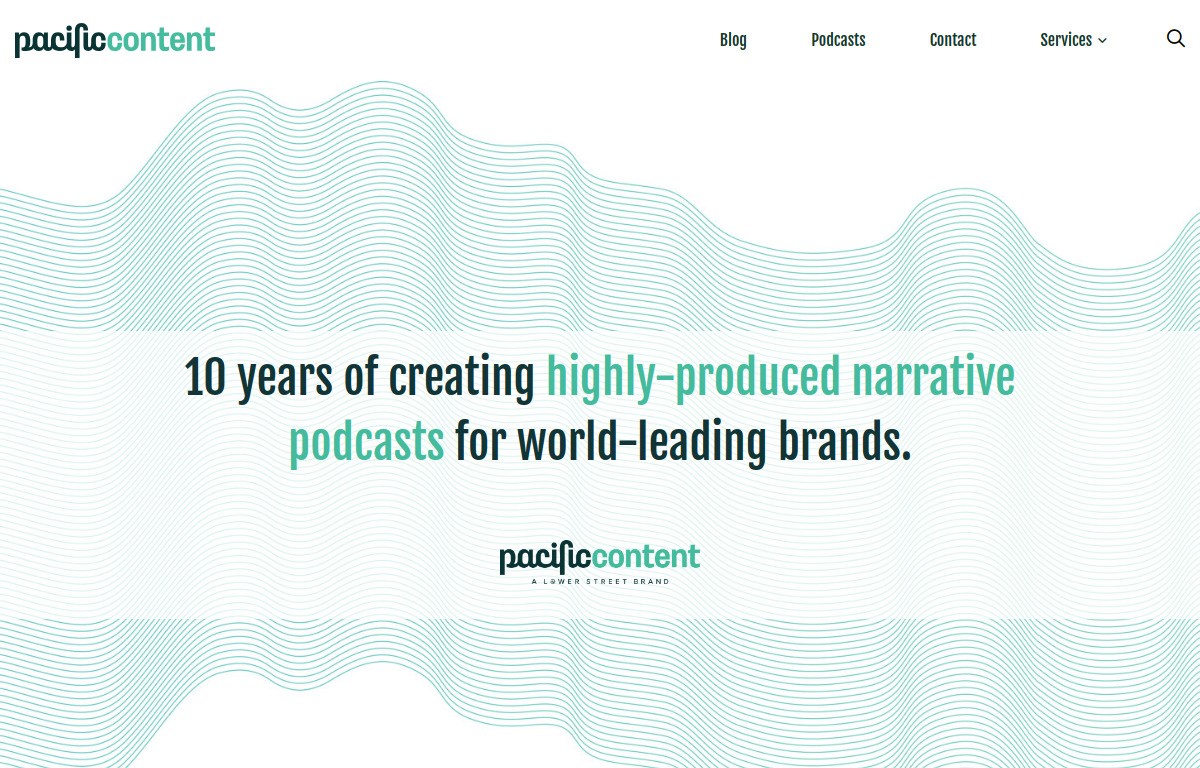
Specialisation: Premium, narrative podcast production for global brands with standout, high-quality storytelling.
Pacific Content is Canada’s largest podcast production studio, trusted by brand and marketing teams to create standout audio. Now part of Lower Street UK, the studio combines scale with deep editorial craft for branded storytelling. Their focus on narrative, premium-quality production helps global brands engage audiences with shows that feel polished, authentic, and memorable.
They partner with global brands and are known for narrative-first approaches that elevate the listener experience and build trust. Clients value their consistent quality standards and a collaborative process grounded in storytelling discipline and attention to detail.
Specialises in narrative, premium-quality branded podcasts
Built for global brands seeking high-impact storytelling
Operates as Canada’s largest podcast production studio
Part of Lower Street UK, expanding capabilities and network
Delivers polished shows aligned to brand voice and goals
Creates brand-safe content through a clear narrative editorial spine
4. Quill
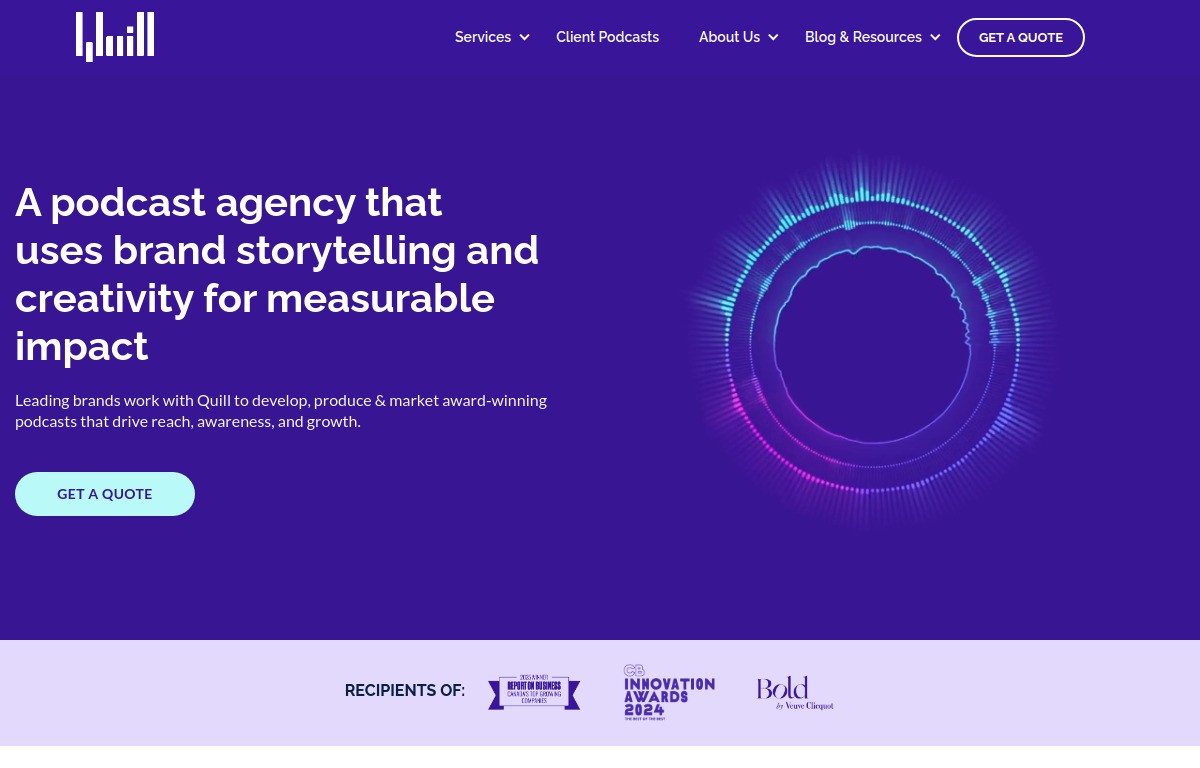
Specialisation: Award-winning Toronto agency delivering branded podcast production for enterprise brands and organizations.
Quill is an award-winning, full-service agency based in Toronto, specializing in branded podcast production for enterprise clients. The team partners with large organizations to design and deliver polished shows that align with brand standards and business goals. Their full-service model simplifies podcasting for enterprises, combining strategic guidance with expert production under one roof.
With a track record supporting brands like Interac, Walmart, Expedia, and PwC, Quill brings proven enterprise experience and reliable processes. Their recognition for excellence underscores quality, consistency, and scalability for complex stakeholders.
Specialises in branded podcast production for enterprise audiences
Provides full-service support—from planning to production and delivery
Built for large organizations with rigorous brand requirements
Delivers polished, on-brand audio content at enterprise scale
Trusted partner to prominent, household-name companies
5. Motion
Specialisation: Full-service production and management of video series and podcasts for B2B marketing teams.
Motion is a United States–based content marketing agency located in Richmond, VA, specializing in creating video series and podcasts tailored for B2B marketing teams primarily in technology and professional services. They position themselves as a full-scope content partner, handling everything from strategy and scripting through production and distribution, with a focus on supporting small, resource-limited teams. Their value proposition centers on end-to-end content creation aiming to build thought leadership and audience engagement.
Motion’s methodology emphasizes comprehensive service delivery, including in-depth content audits and strategic alignment with business goals. While they offer project-based pricing and personalized content programs, their approach measures success by content engagement and brand positioning rather than direct lead generation or revenue outcomes.
Provides full-service video series production including scripting, editing, and motion graphics
Delivers end-to-end podcast production managing industry-specific B2B marketing content
Conducts detailed content strategy with research and audits tailored to objectives
Targets small B2B marketing teams in tech and professional services sectors
Focuses on building thought leadership and audience engagement rather than direct pipeline guarantees
Operates with flexible, project-based pricing typically ranging from $3,000 to $8,000+
Every agency listed here can help you publish consistently. The question worth asking before you choose is what happens after the episode goes live. Downloads are a starting point, not an outcome.
If your goal is meetings with senior buyers, warm relationships with decision makers who never reply to cold outreach, and a growing library of authority content - that is a different brief from RSS management, and it needs a different kind of partner.
Dedicated Podcast Distribution Providers
These platforms keep your podcast online and reachable. They host your files, manage your RSS feed, and deliver episodes to the major apps. What they do not do is shape your message, guide your guest strategy, or help you understand why your show is not generating business. That gap is where most B2B creators get stuck.
Below is the expanded breakdown with clearer strengths, limitations, and the real-world consequences you only learn after several months of publishing.
Acast
Ideal user - Mid-sized shows or brands that want stable hosting and a path to monetisation without switching platforms later.
Strengths - Acast has strong global infrastructure, so your show loads quickly anywhere. Their ad marketplace works well for creators who already have traction. The analytics give you enough detail to understand where people listen and which episodes carry the most weight.
Weak spots - Smaller creators often get excited about monetisation, then find earnings barely cover costs. The dashboard can feel heavier than needed for teams who just want to publish and move on.
Strategic cost compared to an agency - Acast delivers your episodes, but it never shapes the message behind them. If your goal is business impact, their tools are too detached from real strategy. You end up with clean distribution but no direction.
Libsyn
Ideal user - Podcasters who want something reliable and predictable, even if the interface feels dated.
Strengths - Libsyn is stable in a way few platforms match. Things rarely glitch. Their long history means they understand the technical side better than most newer entrants. For someone who wants a no-nonsense foundation, Libsyn is dependable.
Weak spots - The interface feels old and slow. Beginners often get confused because navigation is unclear. The platform gives you hosting, but not much else. You will not find modern creative tools or clear growth pathways.
Strategic cost compared to an agency - Libsyn is like renting a parking space for your audio. It is safe but does nothing to move your show forward or make it matter to the buyers you are trying to reach.
Buzzsprout
Ideal user - Beginners, small creators, or business owners who want something easy and low-friction.
Strengths - The platform feels genuinely friendly. Uploading is simple. Analytics are clear enough that anyone can read them. They also assist with transcript generation and basic optimisation.
Weak spots - You hit the ceiling quickly. As your show grows, you start noticing what the platform lacks - deeper insights, guest strategy tools, or any help with positioning. Their marketing features are lightweight.
Strategic cost compared to an agency - Buzzsprout removes busywork but leaves you alone with the question that actually matters: why should your target buyer listen, and how do you get them on the show? An agency helps you answer that. A host never will.
Podbean
Ideal user - Creators who want hosting plus a built-in path to ads, even if the returns are modest.
Strengths - Podbean bundles multiple tools in one place. Hosting is solid, and the built-in ads platform makes it easy to test monetisation. The live streaming feature is useful for certain communities.
Weak spots - The interface can feel cluttered. Their ad system sounds better than it performs. Most creators do not see enough revenue to justify choosing a platform on that basis alone.
Strategic cost compared to an agency - Podbean gives you features. An agency gives you clarity. If your goal is anything beyond casual publishing, Podbean will not carry the weight.
Ausha
Ideal user - Creators or small teams that want hosting with some marketing automation included.
Strengths - The platform feels modern. They include promotional tools like social snippets and email notifications. Setup is quick and straightforward.
Weak spots - The marketing tools sound impressive but rarely change listener behaviour on their own. You still have to build a real strategy yourself. Automation can only push so far without a clear message behind it.
Strategic cost compared to an agency - Ausha gives you convenience. Agencies give you judgement. Convenience never replaces strategy.
RedCircle
Ideal user - Creators who want hosting plus cross-promotion features to reach adjacent audiences.
Strengths - Their cross-promotion system works well if you find shows with genuine audience overlap. Hosting is clean, and the interface feels light.
Weak spots - Cross-promotions look good on paper, but most pairings do not convert unless the audiences truly share an interest. Many creators expect instant growth and see very little.
Strategic cost compared to an agency - This is a platform that helps with exposure, not positioning. Agencies help you build a message that earns trust with the specific buyers you are targeting, not just impressions across a broad audience.
Simplecast
Ideal user - Creators who want clean visuals, deeper analytics, and a platform that feels professional without requiring a full agency partnership.
Strengths - Their analytics are stronger than most. The interface feels polished. Hosting is reliable. For teams that want data clarity, Simplecast is easy to work with.
Weak spots - Analytics alone do not solve the real problem. You still have to interpret the numbers and adjust your show's format, story, and positioning. Most creators do not know how to act on the insights they are given.
Strategic cost compared to an agency - Simplecast tells you what happened. An agency helps you build what should happen next.
How to Choose Between the Two Types
When a pure distribution provider is enough
A simple provider works when your podcast is already clear in purpose and straightforward to produce. If you are recording conversations for an existing engaged audience, not chasing strategic business goals, and only need a stable home for your episodes, a distribution tool does the job. It is the right choice for hobby creators, early-stage experiments, and anyone who just wants reliable hosting without extra layers.
When a full-service agency is clearly better
Once your podcast has real business expectations, a distribution tool becomes a bottleneck. If you need help shaping the message, reaching the right decision makers as guests, or using the show as part of your sales and marketing system, an agency becomes essential. Teams that care about pipeline, authority, and long-term relationship building always get farther with a partner that does more than upload files.
The shift is particularly clear for founders and sales leaders who sell through relationships and trust. A podcast that invites your ideal prospects as guests - and then repurposes every conversation into authority content - solves two problems at once. Warm introductions now, and content that keeps working for months after. That is a different brief from hosting, and it deserves a different kind of partner.
Time and cost differences
A distribution provider is affordable and quick to set up. You publish in minutes, but all the thinking still falls on you. An agency costs more because you are paying for strategy and execution, not just bandwidth. They spend time on positioning, guest selection, episode structure, and editing quality. What you save is months of trial and error and the frustration of guessing what your target buyer actually wants to hear. For context, the best-fit clients for a full-service B2B podcast agency are typically those already spending £3,000 to £12,000 per conference - and getting inconsistent returns on that investment.
Rights and ownership to verify
Before choosing anyone, confirm that you control your feed, your content, and your data. Some platforms hold rights you might not expect, particularly around monetisation or dynamic ad insertion. Agencies typically keep ownership with the client because they operate on a service model, not a software licence. Always read the terms so your show stays yours when you move or scale.
Common Misconceptions
Believing distribution creates growth
A lot of creators think getting listed everywhere will attract listeners automatically. It does not. Distribution is infrastructure. Growth comes from message clarity, guest quality, consistent positioning, and genuine value for the specific audience you are trying to reach. If the show lacks direction, no platform will save it.
Confusing hosting with agency support
Uploading a file is not the same as having a strategic partner. Hosting tools handle the technical side. They never help you plan episodes, identify the right guests, refine your message, or connect the show to revenue. Many creators expect support from a tool that was never designed to provide any.
Ignoring content and audience strategy
Some teams jump straight into publishing without deciding who they want to reach or why those listeners should care. For B2B shows especially, guest strategy is everything. Inviting the right decision makers as guests - people who would never take a cold call - is the mechanism. Without that clarity, the content floats without purpose and the business case disappears.
Over-focusing on download totals
Downloads look impressive in a report but rarely measure real impact for B2B shows. A show with modest listener numbers can drive more pipeline, authority, and warm introductions than one with ten times the downloads. Impact depends on reaching the right people, not the largest crowd. Full-service B2B podcast production agencies report on meetings and pipeline for exactly this reason.
Future Trends in Podcast Distribution
Video distribution growth
Audio remains the core of podcasting, but video keeps pulling more attention and platform investment. Channels want shows that mix both formats because it increases watch time and discoverability. Creators who ignore video risk invisibility on platforms where their target buyers increasingly spend time. The shift is already underway, and shows that adapt now will have a measurable advantage in reach and repurposing.
AI-powered repurposing
AI tools are getting better at turning long episodes into clips, summaries, and written content - reducing the editing burden significantly. For B2B shows, this matters because every guest conversation can become LinkedIn posts, sales enablement content, and thought-leadership articles with a fraction of the manual effort. The caveat is that AI amplifies what you already have. A well-structured episode with a clear message repurposes cleanly. A meandering one does not.
Integrated marketing support
Distribution tools are slowly bundling small marketing features - social snippets, email notifications, basic promotion. The trend is toward more integrated platforms. The risk is that creators assume these additions can replace human strategy. They cannot. They make execution smoother for teams that already know what they are doing. For everyone else, the strategy gap remains.
Global multilingual distribution
As podcasts reach more countries, platforms are improving international delivery and transcription. Creators who think beyond one language or one region tap into audiences that grow faster and stay more engaged. Translating or adapting content is becoming easier, and for B2B shows targeting decision makers across multiple markets, global distribution infrastructure is increasingly a baseline expectation rather than a premium feature.
FAQ
Q1. Is a distribution agency the same as a podcast host?
No. A host stores your audio and sends it to platforms via an RSS feed. A distribution agency builds a process around that delivery, handles the technical work on your behalf, and - in the case of full-service agencies - aligns the show with a broader business goal. One is a tool. The other is a service with a point of view on outcomes.
Q2. Which type is better for beginners?
Beginners do fine with hosting platforms because the needs are simple and budgets are typically limited. Once you care about strategy, guest quality, and business outcomes, a full-service agency becomes the smarter investment. The tipping point is usually when a founder realises the show is not generating the conversations they actually need.
Q3. Can I switch providers later?
Yes. You can move your RSS feed from one platform to another without losing your subscriber base. The process requires a redirect and a short transition period, but nothing breaks if you do it correctly. Confirm feed portability before you sign with any provider.
Q4. Do distribution platforms help with marketing?
They offer lightweight tools - social snippets, email notifications, basic promotional assets - but they do not guide your message or help you earn an audience. Marketing comes from clarity, positioning, and consistent quality delivered to the right people. Those parts always fall on you or your agency partner.
Q5. What does a full-service agency handle?
They shape the direction of your show, manage guest outreach and booking, edit audio, handle distribution, and keep publishing consistent. The best ones also align the podcast with your commercial goals - so conversations with guests translate into warm relationships, pipeline, and reusable authority content, not just episodes in a feed. If you want to explore what that looks like in practice, book an intro call to talk through your specific situation.
Q6. Do B2B podcasts need different agencies?
Almost always yes. B2B podcasts need partners who understand sales cycles, senior buyer psychology, and relationship-led growth. A standard creative or production agency focuses on audio quality and audience size. A B2B-specialist agency focuses on who is sitting across the microphone, what happens after the recording, and how the conversation moves a commercial relationship forward.
Q7. How do I measure ROI on a podcast distribution agency?
For pure distribution providers, the primary metrics are feed reliability, platform reach, and download trends. For full-service B2B agencies, ROI is measured in meetings booked with target buyers, pipeline generated from guest relationships, and the compounding value of the content library built over time. The two categories use fundamentally different scorecards - make sure you know which one you are signing up for before you commit.

Aqil Jannaty is the founder of ThePod.fm, where he helps B2B companies turn podcasts into predictable growth systems. With experience in outbound, GTM, and content strategy, he’s worked with teams from Nestlé, B2B SaaS, consulting firms, and infoproduct businesses to scale relationship-driven sales.