




What Is Podcast Outbound Strategy?
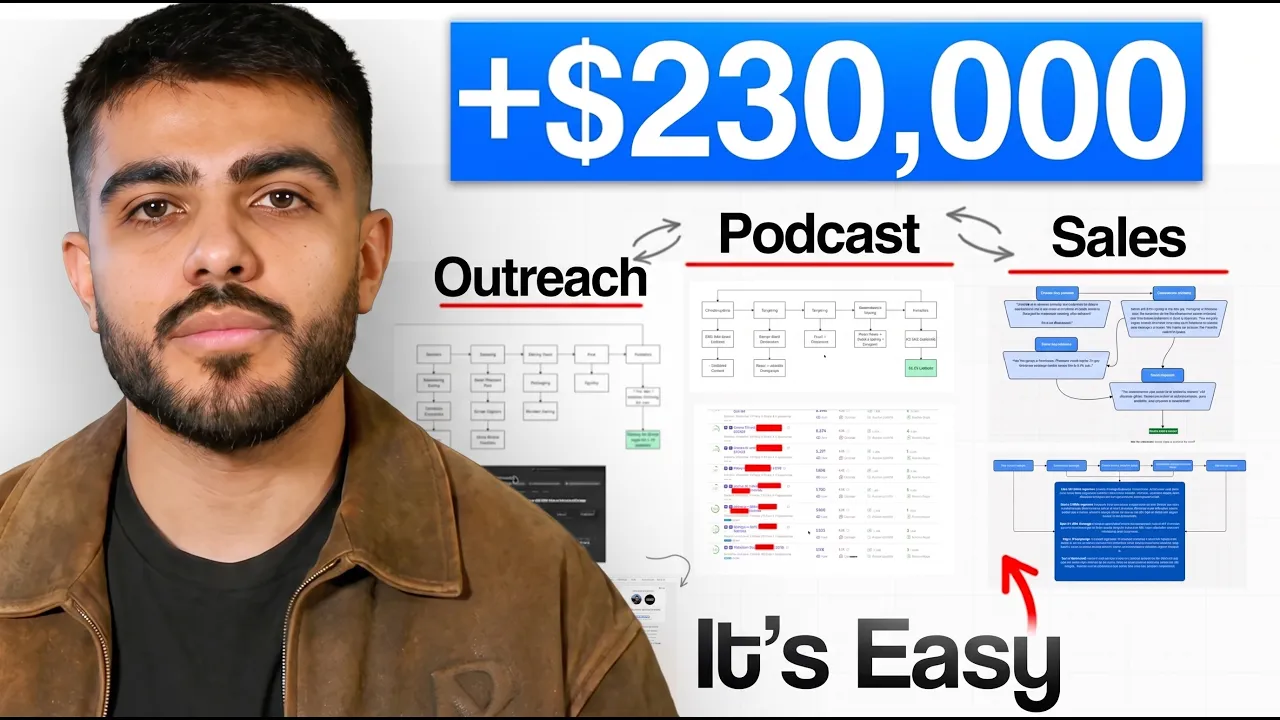
Podcast outbound strategy treats each episode as an outbound asset. Instead of cold calls and templated emails, you invite target accounts, record a conversation that showcases value, then use that recording to start, warm, and scale sales conversations. The goal isn’t downloads alone, it’s pipeline and partnerships. Episodes become social proof, personalized touchpoints, and reusable content across email, LinkedIn, and sales decks.
A good podcast outbound strategy blends editorial planning, guest sourcing, and distribution. You plan episodes around buyer problems, book voices who influence decisions, record conversations that surface insights, then push clips and transcripts into your outbound sequences. For teams that don’t have the bandwidth to run that end-to-end, working with a done-for-you b2b podcast agency like ThePod.fm speeds production, guest booking, and promotion while keeping your focus on selling.
What Does Podcast-Led Outbound Mean?
Podcast-led outbound flips the script. Rather than outbound leading to content, the podcast leads outbound. You use the podcast to create legitimate reasons to reach out, to provide value before asking for a meeting, and to hand prospects proof that you understand their world. Outreach looks like an invitation to appear, a clip that references a shared challenge, or a direct follow-up with an episode tailored to the recipient’s role. It’s outbound that feels earned, not interrupted.
When Should Teams Use Podcast Outbound?
Use podcast outbound when deals require trust, nuance, or third-party validation. Typical scenarios:
Enterprise or mid-market sales with extended cycles.
Complex solutions that need storytelling to explain ROI.
ABM programs where personalized content increases win rates.
Partner and alliance building, or customer advocacy programs.
Also consider capacity. If you can commit to consistent episodes and host access to decision-makers, podcast outbound scales. If you can’t sustain cadence, the content lives longer than a single campaign, but effectiveness drops without follow-through.
How Does Podcast Outbound Differ From Traditional Outbound?
Traditional outbound trades volume for impact, it interrupts to get attention. Podcast outbound trades interruption for credibility, it offers value first. Key differences:
Source of permission, not demand, recipients engage because they were invited or because peers appear.
Transferable credibility, guest endorsements attach to your brand.
Evergreen assets, episodes continue to warm accounts long after the outreach ends.
Multi-format amplification, audio becomes clips, quotes, blog posts, and social content that feed sequences.
Different metrics, you measure pipeline influence, meeting quality, and downstream conversions, not just open rates.
Why Use Podcasts For Outbound?
Podcasts compress trust, create first-party signals, and improve connect rates for targeted outreach. They’re also the best B2B channel left for authentic long-form conversations. One episode can fuel dozens of hyper-personalized touches across email, social, and sales playbooks. When you build a show around your buyers’ questions, the content does more than inform, it opens doors.
How Do Podcasts Build Trust Faster?
Voice trumps text when credibility matters. Hearing a founder, a customer, or an analyst discuss a hard problem in plain language humanizes your brand instantly. Guests bring third-party validation, and long-form conversations let you surface nuance that short ads can’t. Listeners infer competence, empathy, and focus from tone, pauses, and depth. That’s why trust accrues faster from conversations than from brochures.
How Do Podcasts Generate First-Party Signals?
Podcasts create measurable, owned interactions. Examples of first-party signals:
A guest agreeing to record establishes a relationship and intent.
Plays, completion rates, and clip engagement show content resonance.
Direct replies, meeting requests, and social shares are explicit signals of interest.
Web traffic from episode pages, resource downloads tied to an episode, and CRM events mapped to listens.
Capture those signals in your CRM or marketing platform. Tools like HubSpot can record custom events for episode-driven behaviors, turning passive listens into actionable touchpoints for reps.
How Do Podcasts Improve Connect And Response Rates?
They give you a better opening line. Instead of “quick call?” you send a clip, a transcript quote, or an invitation to join a conversation. Tactics that lift response rates:
Send a short, personalized audio or clip featuring a topic relevant to the recipient.
Reference mutual connections or past quotes from the prospect to show research.
Share a transcript snippet that highlights a problem you can help solve.
Amplify the episode on LinkedIn and tag the prospect, creating social proof before outreach.
Those tactics lower friction, create curiosity, and show respect for the recipient’s time.
How To Identify Target Accounts And Guests?
Successful podcast outbound starts with alignment: the accounts you want to close, the guests who influence them, and episode topics that speak to buying committees. Think of account selection and guest booking as two sides of the same coin. Each guest should move an account closer to a decision.
How Do You Prioritize Target Accounts For Podcast Outreach?
Prioritize using a weighted scoring approach. Factors to consider:
Fit: revenue, industry, tech stack alignment.
Intent: behavior signals like content consumption, event attendance, or inbound requests.
Influence: accounts with public influence or networks that amplify episodes.
Accessibility: accounts where you have existing relationships or champions.
Score accounts, then tier outreach. Top-tier accounts get direct invites to appear as guests or co-hosts. Mid-tier receive personalized episode clips and invite-to-listen outreach. Lower tiers enter nurture streams fed by repurposed episodes.
How Do You Find Guests Who Influence Buying Decisions?
Look beyond job titles. Seek people who shape outcomes, storytellers who can explain ROI, and advocates who already publicize their views. Sources:
Customer champions and alumni who’ve seen measurable results.
Analysts, consultants, and industry authors who advise buyers.
Conference speakers and LinkedIn voices with high engagement.
Past guests on relevant niche podcasts.
Validate influence by checking event appearances, article citations, and social engagement. If booking is hard, consider a b2b podcasting agency that specializes in guest procurement and warm introductions, they’ll turn hard-to-reach leaders into repeat guests.
How Do You Map Buying Committees To Episode Topics?
Design episodes as targeted plays. Steps to map committees:
List the core buyer personas in the committee, for example CFO, head of engineering, head of marketing.
For each persona, list the top 2 to 3 questions that drive their decisions, like cost avoidance, system reliability, or pipeline expansion.
Create episode themes that answer those questions in a single narrative, and plan segments that speak directly to each persona.
Produce clips and one-pagers for each persona, so sales can lead with a CFO-focused clip or a CTO-focused technical dive.
This approach lets one recorded conversation serve multiple decision-makers, each receiving content tailored to their priorities.
How To Craft A Guest Outreach Playbook?
A playbook turns one-off invites into repeatable pipeline motions. Your goal: predictable replies, booked sessions, and guests who open doors inside target accounts.
What Makes A High-Converting Podcast Invite?
Write one invite that answers three questions in the first two lines: why you picked them, what value they get, and how easy it is. Concrete elements that convert:
A one-sentence reason that proves research, for example a recent post, talk, or company milestone.
A clear guest benefit, not vague vanity, for example “share a short case study that your team can amplify” or “connect you with buyer peers.”
Logistics up front, a 30–40 minute window and two optional dates, so the recipient can act without back-and-forth.
A social proof line, one or two credible past guests or results.
A single CTA, framed as low commitment, e.g., “Pick one of these times or tell me three that work.”
Keep the tone human, not salesy. Test subject lines and opening sentences. Track which invite variant yields booked calls and iterate.
How Do You Personalize At Scale?
Personalization is layered, not handcrafted. Combine three tiers:
Account-level signals, the things every contact at that company should see, like a product launch or funding round.
Role-level hooks, a short sentence that speaks to a persona’s pain, e.g., “CFOs I talk to worry about multi-year spend.”
Micro-personalization snippets, one line of evidence that you actually read them, such as a recent quote or post.
Operationalize it with a template system. Store approved lines for each persona in Notion, use tokens in your outreach platform, and add one manual sentence at send time. That preserves scale while keeping the invite believable.
Measure what matters, not words. Track booked rate by persona, invite variant performance, and time-to-book. Use those signals to prune or amplify lines.
If you’d rather outsource guest procurement and messaging, working with a b2b podcast agency can be the fastest path to consistent, high-touch booking and access to hard-to-reach guests.
How Do You Use Multi-Threading In Guest Outreach?
Multi-threading means several touchpoints across people and channels, timed and coordinated. A simple sequence:
Thread 1, Primary Contact: email invite, two follow-ups over 7–10 days.
Thread 2, Social Warm: a LinkedIn connection or comment referencing the invite, posted between email attempts.
Thread 3, Internal Champion: reach out to a known ally inside the account, share the invite, ask for an intro.
Thread 4, Stakeholder Nudge: if the primary rejects, ping a related stakeholder with a clip or topic invite.
Use channel-specific creative. On LinkedIn, lead with value: a short clip or a quote. On email, lead with outcome and logistics. Keep messages short and sequenced, and log every contact touch so outreach doesn’t feel chaotic.
How To Run Post-Episode Sales Cadences?
An episode should start the sales motion, not end it. Post-episode cadences turn warm participation into meetings, referrals, and sales signals.
What Follow Ups Turn Guests Into Conversations?
Post-episode follow-up is a sequence of utility, not asks. Example cadence:
Same-day thank you with raw recording and a short note about next steps.
Day 3, share a polished clip and a suggested social share text.
Week 2, send an episode recap with one insight tied to their role and a soft invite to discuss how that insight applies to their org.
Week 4, a case-study style note showing how similar conversations led to a pilot or partnership.
Each follow-up includes a single next action: share the clip, approve show notes, or suggest a person to introduce. Make it easy to say yes.
How Do You Ask For Next Steps Without Pressure?
Frame the next step as utility for them, not a meeting for you. Tactics that work:
Offer two specific options, for example a 20-minute “debrief” to explore an idea, or permission to introduce them to a potential partner.
Time-box the ask, “20 minutes next week,” and include a calendar link.
Use conditional language that assumes value, “If you’d like, I can pull together how other teams solved X and share next steps.”
Keep “no” cheap. Give an easy opt-out so declining feels okay and relationships stay intact.
Be explicit about the benefit of the next step, not the company outcome. People say yes when they see immediate value for themselves.
How Do You Log Outcomes And Next Actions?
Rigorous logging turns one conversation into a repeatable pipeline motion. Minimum fields to capture in CRM:
Episode ID and URL, so every rep can access the asset.
Guest outcome tag, for example Interested, Needs Nurture, Declined, Referral.
Next action and owner, with a due date.
Key topics and buyer pain points surfaced.
Internal notes for promotion or repurposing.
Record an event in HubSpot or your CRM the moment an episode publishes, and link all follow-up activities to that event. Use consistent tags and a short taxonomy so analytics can answer questions like which episode themes generate demos.
Keep the logging simple, then automate reports that show which episodes produce meetings, referrals, and closed deals.
How To Use Episodes As Outbound Touches?
An episode is an asset, not a one-off. Use it to create micro-content that fits outbound formats and buyer attention spans.
How Do You Create Email And LinkedIn Snippets?
Turn a 45-minute conversation into one-line hooks and thirty-second clips. Process:
Pull 2–3 high-impact quotes that answer buyer questions.
Write two subject lines: one curiosity-driven and one value-driven.
Create a 20–45 second audio or video clip that opens with the guest’s name and a sharp insight.
Pair the clip with a 1–2 sentence personalization and a single CTA.
Test formats. Some audiences respond to a quote in the subject line, others to a personalized clip in the body. Use Descript to generate clean transcripts and pull clips quickly.
How Do You Build Account-Specific Content Packs?
For high-value accounts, assemble a one-click pack a rep can send. Contents:
A 30–60 second clip labeled for the persona, e.g., “CRO clip: pipeline tactics.”
A one-page summary linking episode insights to the account’s known pain.
A suggested outreach script for the rep.
A social post draft they can publish or tag the prospect with.
Host packs in a shared folder or in your enablement tool so reps can grab and send in two clicks. Make the content feel bespoke by inserting one line that references the target account’s public milestone.
How Do You Use Video Clips In Cold Outreach?
Video is attention currency when it’s short and specific. Best practices:
Lead with a 3–5 second personalized hook that names a problem the recipient cares about.
Keep total length 20–60 seconds.
Use a face-forward host clip when the relationship needs trust, or a guest clip when you want peer validation.
End with a single, low-friction CTA, for example “If this resonates, should I send a 10-minute brief on how others solved it?”
Record and edit on Riverside or a similar platform, then compress and host where email clients play inline. Track clicks and plays as outbound signals, and follow play behavior with a timely, context-aware follow-up.
Podcasts are the most authentic B2B channel left. Treat each episode as a content engine, then map clips, snippets, and account packs into your sales rhythms. When you need help scaling this end-to-end, partnering with a b2b podcasting agency can turn conversations into meetings and pipeline faster.
How To Align Podcast With Sales Workflow?
Alignment is where podcasting stops being content theater and starts pulling deals forward. Treat episodes as sales-ready artifacts: plan topics to surface buyer objections, tag assets by persona, and schedule distribution to match rep outreach windows.
How Should SDRs And AEs Collaborate Around Episodes?
Make roles clear. SDRs drive guest discovery, invitations, and initial outreach; AEs own post-episode qualification and deal advancement. Practical handoffs:
SDRs supply the guest context pack, three persona-ready clips, and the prospective account’s score before the recording.
During recording, AEs listen or get a live feed when a top-tier target is involved, so they can prime follow-ups.
After publishing, SDRs send the first two nurturing touches: a thank-you plus a tailored clip. AEs pick up at the qualification point, convert interest into discovery calls, and own negotiation.
Short cycles and shared checklists keep this seamless. Store clips, show notes, and suggested scripts in a shared enablement space so both teams use the same language.
What Handoff Criteria And SLAs Are Needed?
Set measurable gates, not vague promises. Example SLAs:
Booking to recording: SDRs must deliver a confirmed guest and pre-interview notes within 72 hours of booking.
Post-recording asset delivery: production delivers clips, transcript, and a one-pager within 5 business days.
First outreach: SDRs send the post-episode thank-you and social pack within 24 hours of asset delivery.
AE follow-up: AEs contact interested guests or referred accounts within 3 business days of the SDR’s second outreach.
Define handoff criteria too: a handoff occurs when the guest expresses interest beyond promotion, when a clip resonates (measured by reply or play), or when the guest provides a referral. Log these events in CRM with timestamps so SLA compliance is auditable.
How Do You Train Reps On Podcast-Based Outreach?
Train for clarity and context, not production skills. Run short, role-specific sessions:
SDRs: 60-minute workshop on invite templates, personalization tokens, and how to send clips with purpose.
AEs: 90-minute role-play on turning episode insights into discovery questions and framing pilots.
Ongoing: weekly 15-minute syncs that review one episode’s best clip, a winning script, and a failed outreach that taught something.
Provide micro-plays: one-sentence hooks, 20–45 second clip recommendations per persona, and objection responses tied to episode topics. Use Notion or an enablement repo to version these plays. Certify competency with a simple checklist: can the rep send a persona clip, ask a context-rich question, and log the outcome in CRM.
If you lack internal bandwidth to build this program, a done-for-you b2b podcast agency can supply training templates and playbooks as part of their service, speeding adoption.
How To Measure Podcast Outbound Performance?
Measurement shifts the conversation from vanity to revenue. Focus on signals that map to buyer intent and pipeline velocity, not just listens.
What KPIs Show Podcast Outbound Success?
Prioritize a handful of leading and lagging indicators:
Leading: invites accepted, clip plays per targeted account, replies driven by episode assets, and meaningful social engagement from target accounts.
Mid-funnel: meetings influenced by an episode, qualified opportunities opened that cite an episode, win-rate lift for engaged accounts.
Lagging: pipeline value and closed revenue directly tied to episode-driven motion.
Track clip CTRs, reply rates to episode-based outreach, and demo conversion rates. Those ratios tell you whether the podcast is improving outreach quality or merely adding noise.
How Do You Attribute Pipeline And Revenue?
Attribution should be pragmatic, multi-touch, and CRM-driven. Steps to make it work:
Create episode-specific touch events in your CRM so every clip sent, play, or guest interaction can be recorded.
Use a multi-touch attribution model for pipeline: first-touch = episode that started outreach, assist touches = clips or plays that preceded opportunity creation, last-touch = the meeting or contract signature.
Enforce mandatory field capture on opportunity creation: “Episode Source” and “Episode Touchpoints” with auto-population from play events when possible.
For deals that involve multiple assets, use weighted credit. Automate attribution pipelines so finance and marketing don’t have to stitch spreadsheets. When you need help wiring this, partner teams like ThePod.fm not only produce episodes, they can help design the distribution and tagging approach that feeds CRM attribution properly, accelerating the path from conversation to client. If you want vetted partners, consider browsing a vetted b2b podcast agency directory to compare services.
How Do You Track Completed Conversations Versus Meetings?
Completed conversations are distinct signals; they matter more than calendar counts. Define them and instrument accordingly:
Completed conversation definition: a recorded, substantive exchange where a prospect or guest discusses a problem, expresses intent, or refers a colleague. Time threshold helps, for example 8+ minutes of focused discussion.
Meetings definition: scheduled time on a calendar, typically with discovery or demo as the stated purpose.
Track both as CRM events. Use automated triggers: when a rep sends a clip and the recipient replies with interest, log a “Completed Conversation — Asynchronous.” When a live follow-up is booked, log a “Meeting.” Tag conversations with outcome sentiment, topics, and next action. This lets you compare conversion rates: completed conversations to meetings, meetings to qualified opportunities, and so on. Those ratios reveal whether your episodes are starting real dialogues or just generating clicks.
What Tech Stack Supports Podcast Outbound?
The right stack turns recorded conversations into repeatable outreach at scale. Focus on tools that accelerate guest discovery, speed editing, and feed CRM events.
What Tools Help Find And Outreach Guests?
Use a mix of discovery and outreach platforms:
Discovery: LinkedIn for intent and network context, Apollo or ZoomInfo for contact data, and event speaker lists for credibility signals.
Outreach: sequence platforms like Outreach or SalesLoft for scaled, personalized follow-ups, and Vidyard or Loom when you want to send short host-hosted clips inline.
Scheduling: Calendly or GoodTime with booking links preloaded for quick guest acceptance.
For high-touch guest procurement, a specialist b2b podcasting agency can handle warm introductions and booking cadence, saving SDR time and improving acceptance rates.
What Tools Help Edit And Repurpose Episodes?
Editing and repurposing should be fast and human. Recommended stack:
Remote recording: Riverside for high-quality multi-track audio and video capture.
Editing and clipping: Descript for transcript-driven edits, quick clip extraction, and filler removal.
Asset management: a shared cloud repo or show-specific folder in Google Drive, Dropbox, or a dedicated DAM.
Social publishing: Hootsuite, Buffer, or native LinkedIn scheduling for clip distribution.
Automate transcription-to-clip workflows so SDRs can pull a persona clip within minutes of asset delivery. Production templates for 30-, 45-, and 60-second cuts save hours in post.
What CRM And Attribution Tools Should You Use?
Your CRM must capture episode events and support multi-touch analysis. Common choices:
HubSpot: flexible custom events and easy integration with marketing stacks, good for mid-market teams.
Salesforce: robust for enterprise-grade attribution rules and complex opportunity models.
Attribution/analytics: use tools like Segment or Snowplow to forward play and clip events to your data warehouse, then run revenue attribution in Looker or Power BI.
Instrument playback and clip interactions with UTM tags, custom event calls, or native integrations so every episode touch becomes a CRM event. Keep taxonomy tight: episode ID, persona tag, asset type, and touch outcome. If wiring this is outside your team’s skillset, a b2b podcast agency can often bridge production and analytics, delivering assets already instrumented for CRM ingestion.
If you want an end-to-end option that combines guest booking, production, distribution, and CRM-ready tagging, teams like ThePod.fm act as a done-for-you b2b podcast agency that helps brands turn conversations into clients. For comparisons and partners, look through a curated list of production partners at a b2b podcast agency directory.
How To Scale And Systemize The Program?
Scaling a podcast outbound program means two things: repeatability and reliable handoffs. Systemize the parts that don’t require creativity, then reserve human time for relationship work.
How Do You Create Repeatable Playbooks?
Turn recurring activities into templates with measurable outcomes.
Define the play: intent, target persona, desired outcome, and key metric, for example “CFO clip to drive a discovery meeting, target 10 replies/month.”
Build modular assets: an invite template, pre-interview guide, recording checklist, three persona clips, and a one-page post-episode pack. Store these in Notion or your enablement hub.
Create a guest scorecard. Score influence, story depth, potential referrals, and fit. Use that score to prioritize bookings.
Version control the playbook and run monthly audits. Keep the lines that convert, drop the rest.
Train reps on one play at a time, certify them, then add new plays. Repeatability comes from discipline, not complexity.
How Do You Automate Cadences Without Losing Personalization?
Automate mechanics, preserve the human signal where it matters.
Use sequence tools like HubSpot, Outreach, or SalesLoft for timing, tokenization, and reply detection. Push asset-ready webhooks that populate clip URLs automatically.
Personalization strategy: three tiers. Tokenized account details, role-level hooks, one manually written sentence added at send time. That one sentence preserves credibility.
Automate clip generation with transcript-driven tools like Descript, but gate the first few sends to a human review to avoid off-brand messages.
Route replies to reps in real time. Automation should speed delivery, not replace judgment. If a prospect replies, pull them out of automated flows and hand to a human within your SLA.
Monitor quality signals, not just opens. Reply sentiment, clip plays by account, and meeting conversions tell you if automation is helping or hurting.
When Should You Outsource Production Or Hire Internally?
Decide on three axes: speed, control, and cost.
Outsource when you need speed, polish, and guest access now. A specialized b2b podcast agency accelerates guest procurement, editing, and CRM tagging so your team focuses on sales. If you want to compare partners, start with a curated list of a b2b podcast agency.
Hire internally when your content requires deep product knowledge, tight messaging control, or you’re running very high volume episodes per month. Internal teams lower per-episode marginal costs after ramp.
Hybrid is often optimal: an internal editorial lead plus an agency for booking and post-production. This gives you strategic control and operational scale.
Evaluate by cost per qualified meeting and time-to-first-episode. If outsourcing shortens your sales cycle materially, the retainer pays for itself fast.
Regardless of model, require CRM-ready deliverables: clips, transcripts, persona tags, and UTM'd links. That prevents handoff leakage and preserves attribution.
How To Integrate Podcast With Demand Gen?
A podcast shouldn’t sit in marketing limbo. Make episodes a distributed demand engine that feeds ABM, paid, and event flows.
How Do You Use Podcast Content In ABM Campaigns?
Make episodes part of the account story, not a generic send.
Build account-specific content packs: a persona clip, a one-page tie-back to the account’s priorities, and a suggested outreach script for reps.
Use personalized episode landing pages. Swap hero text and CTA to reference the account’s public milestone, then track visits as intent signals.
Sequence clips into ABM plays: invite the target to listen, surface a clip that answers a persona question, follow with a one-pager showing outcomes for similar accounts.
Measure per-account engagement: clip plays, page visits, replies, and downstream meetings. Use that data to escalate outreach or expand to adjacent stakeholders.
How Do You Run Paid Promotions And Syndication?
Paid amplification buys reach, syndication buys relevance.
For paid: promote 20–45 second clips on LinkedIn, YouTube, and targeted newsletters. Direct ads to account-personalized landing pages, and measure CPL by qualified meeting.
For audio: test programmatic buys on niche B2B audio networks for category reach, but always tag with UTMs and CRM events.
For syndication: republish transcripts as thought pieces on Medium or industry sites, pitch episode excerpts to trade newsletters, and arrange guest cross-posts with partner podcasts to tap existing audiences.
Treat paid and syndicated placements as experiments. Run short tests, measure downstream meetings, then scale the creatives and channels that drive pipeline.
How Do You Coordinate Events And Thought Leadership?
Use episodes to seed live moments and sustain the conversation afterward.
Turn guests into speakers. Use episodes as prep material so panels are sharper and more actionable.
Record live at events and produce “post-event” episodes that extend the session to absent accounts.
Create event-specific promos: pre-event clips to drive attendance, live-recorded sessions for VIPs, and follow-up episodes that surface attendee insights.
Package event episodes as thought-leadership bundles for press outreach and partner co-promotion. That keeps the momentum going beyond a single panel.
How To Avoid Common Podcast Pitfalls?
Avoid predictable mistakes that erode credibility, waste budget, or create legal risk.
How Do You Prevent Low-Value Guests And Topics?
Guard editorial quality like it's the product.
Use a guest and topic rubric. Require a clear outcome for every episode: educate, unstick a decision, or generate introductions.
Run a pre-interview that’s a short recorded call. If the conversation stalls in the pre-call, it will in the episode.
Reject pitch-heavy guests. If someone can’t speak in stories or evidence rather than product slides, save time and move on.
Monitor performance and prune. If a guest or topic consistently generates clicks but not conversations, stop booking similar ones.
How Do You Ensure Legal Consent And Privacy?
Get rights and permissions before you press record.
Use a simple, signed release that grants reuse rights across channels and specifies publicity windows. Capture this before recording.
Clarify off-the-record rules in writing. If a guest shares sensitive customer data, redact or get explicit written permission before publishing.
Log consents in your CRM with links to the signed documents and the published asset.
For international guests, add GDPR and privacy clauses. Treat data handling as non-negotiable, and route legal questions to counsel early.
How Do You Manage Time And Production Costs?
Efficiency is a multiplier for program ROI.
Batch recordings, ideally 2–4 episodes in a day, to amortize setup and studio costs.
Use transcript-driven editing workflows with Descript to cut time in post. Combine that with production templates for intros, outros, and CTAs.
Measure cost per influenced meeting, not just cost per episode. That aligns production decisions with revenue.
Negotiate retainers or volume discounts with production partners if you run steady output. A consistent schedule lowers unit costs and improves polish.
Keep a lean post-production SLA: raw file to publish-ready in 3–5 business days for fast outbound cadence, or longer for highly produced specials.
FAQs
How Long Before Podcast Outbound Generates Pipeline?
Short answer: you’ll see signals in weeks, pipeline in months.
Invites accepted, replies, and clip plays appear quickly, often within the first 2–6 weeks if you’re booking target accounts and pushing clips into outreach. Those are leading indicators, not revenue. Meaningful pipeline—qualified meetings and opportunities—typically emerges in 2–6 months, depending on deal size and cadence. Closed deals follow your normal sales cycle after that, so expect full ROI in 6–12 months for mid-market and enterprise motions.
How to speed it up: record guests from target accounts, publish assets within 3–5 business days, push persona-specific clips into rep cadences, and tag every interaction in CRM. Treat episodes as content engines, not one-offs. If you need to accelerate production and tagging, a b2b podcast agency can compress timelines and deliver CRM-ready assets.
Can Guests Be Qualified As Leads During Recording?
Yes, and you should treat the recording as a qualifying touch, not a sales trap.
Use a short pre-interview form to capture role, pain, and interest level. Run a quick pre-interview call to confirm fit. During recording, listen for explicit intent signals, for example mentions of upcoming projects, budgets, or referrals. If those signals appear, ask soft, utility-first questions at the end, for example “Would you like a short follow-up where we map this to other teams who faced the same problem?” That’s a low-pressure next step.
Operational rules: capture consent to follow up on the release, score the guest in CRM immediately after the recording, and tag the episode with intent indicators. Log next actions—debrief, intro, demo—within 24 hours so reps can act while the conversation is fresh.
How Many Episodes Should I Produce To See Results?
Aim for consistency, not a magic number.
Run a pilot of 6–8 episodes to validate topics and guest quality. That’s enough to surface which themes generate replies and meetings. After the pilot, cadence matters: one episode every 1–2 weeks for 3 months gives repurposing volume and keeps outbound fresh. Fewer than one episode a month slows momentum; daily drops burn resources without strategy.
For ABM: prioritize a small number of highly targeted episodes for top accounts, then scale broad themes for mid-tier accounts. Batch recordings to reduce cost and keep production efficient. Measure by cost per influenced meeting, not episodes published.
Do I Need Video For Podcast Outbound Success?
No, you don’t need video to win, but video helps for certain plays.
Audio alone creates trust and fuels newsletters, blog posts, and LinkedIn quotes. For account-based outreach, short video clips increase open and reply rates, especially on LinkedIn and personalized emails. Video is worth the extra time for VIP invites, keynote-style guests, or hero clips you’ll use in paid promos.
If you add video, keep it short, 20–60 seconds, and start with a personalized hook. Record with a platform like Riverside and edit with Descript when speed matters. If you’re resource-constrained, prioritize audio-first, then add video selectively for highest-value accounts.
How Do I Price Sponsored Episodes Or Promotions?
Price by audience value, not vanity metrics.
Consider these variables: audience fit to buyer persona, demonstrable engagement from target accounts, exclusivity (category or time window), and deliverables such as host reads, clips, and reporting. Common models:
Flat fee for an episode or series, when reach and targeting are proven.
CPM for impressions on clips or promoted placements.
Performance-based, for example CPL or lead-share, when you can trace qualified meetings back to the episode.
A practical approach: calculate the value of a qualified meeting for your business, estimate conversion rates from clip plays to meetings, then price sponsorship to deliver a cost per lead below that value. Offer pilots with a discounted flat fee plus a performance kicker to build trust. Negotiate clear measurement and reporting SLAs so sponsors can see pipeline impact.
If packaging and pricing feel fuzzy, consult a b2b podcast agency or browse a curated list of options to compare how other shows price similar packages.
How Do I Measure ROI On Podcast Production Costs?
Measure dollars tied to pipeline, not downloads.
Steps that produce a defensible ROI:
Instrument every episode touch as a CRM event, including clip sends, plays, and guest interactions.
Use a consistent attribution model, for example multi-touch credit for episode-first outreach and assist credit for subsequent plays.
Track conversion funnels: clip plays to replies, replies to meetings, meetings to opportunities, opportunities to revenue.
Compute cost per influenced meeting and cost per qualified opportunity, then compare to average deal size and LTV.
Simple formula: (Total production + promotion costs) ÷ (Number of influenced qualified meetings) = Cost per influenced meeting. Multiply that by your conversion rate and average deal value to estimate revenue ROI over a 6–12 month window.
Automate tagging so you don’t hand-stitch spreadsheets. If you want an end-to-end option—production, distribution, and CRM-ready tagging—a b2b podcast agency can deliver assets already instrumented for attribution, shortening the path from conversation to client. For partner recommendations, see a curated list of top b2b podcast production agencies.

About the Author
Aqil Jannaty is the founder of ThePod.fm, where he helps B2B companies turn podcasts into predictable growth systems. With experience in outbound, GTM, and content strategy, he’s worked with teams from Nestlé, B2B SaaS, consulting firms, and infoproduct businesses to scale relationship-driven sales.