


Why do L&D companies keep losing enterprise deals they were technically qualified for?
If you run a corporate-training or leadership-development business, you have probably lost a contract you were perfectly capable of delivering. You answered every RFP question, your case studies were strong, your pricing was fair, and you still finished second.
The uncomfortable truth is that by the time the RFP landed in your inbox, the decision had largely been made.
Forrester's research on decisive B2B buyers found that 68% of B2B buyers already have a front-runner vendor in mind at the very start of the process, and that front-runner goes on to win 80% of the time. And these are not solo decisions: Forrester's State of Business Buying, 2024 puts the average B2B purchase at 13 people involved, with 89% of decisions crossing two or more departments.
In enterprise L&D, that means the head of leadership development, an HR business partner, a procurement lead and the business-unit sponsor have all formed opinions long before a formal process starts. The firms that win are the ones who were in the room shaping those opinions.
Everyone else is competing to look least risky inside a process designed to filter them out.
So the real question is not "how do we write a better proposal?" It is "how do we become the relationship the committee already trusts before the requirement is even written?"
Who actually buys enterprise training, and what does each person care about?
Enterprise training is bought by a committee, not a person, and each member is solving a different problem. Win the contract by mapping them early and speaking to each one in their own language.
The L&D or talent-development leader owns the outcome. They care about capability gaps, programme design, learner experience and whether your approach fits their competency framework. They are usually your champion, but they rarely sign alone.
The HR or people director connects the programme to retention, succession and culture. The LinkedIn 2025 Workplace Learning Report found that only 36% of organisations qualify as "career development champions" yet those that do see stronger retention and profitability, which is exactly the business case your HR sponsor needs to defend the spend internally.
The business-unit sponsor holds the budget and the pain. A regional sales VP or operations director wants measurable performance change, not a course. If you cannot tie your programme to their numbers, you are a cost line, not an investment.
Procurement owns risk, compliance and commercial terms. They are not trying to buy the best training, they are trying to avoid a bad supplier. Preferred-supplier status, references, data security and clear deliverables are their language.
This is the same dynamic that plays out across complex B2B purchases, and it is worth understanding how enterprise buying committees reach consensus before you ever try to influence one. The firms that win treat each stakeholder as a separate sale with a shared close.
How do preferred-supplier lists and frameworks really work?
Most large enterprises and public-sector bodies buy training through preferred-supplier lists or framework agreements. Getting onto one is the difference between being invited to bid and never hearing about the opportunity at all.
Once a framework is in place, individual purchases become "call-offs" against pre-approved suppliers, so the heavy due diligence is done once and the people not on the list are structurally excluded.
Two things get you onto these lists. The first is the unglamorous compliance work: insurance, accreditations, data-protection policies, financial stability, diversity credentials and reference clients at similar scale.
The second, and the one most firms neglect, is relationship. Frameworks are reviewed and refreshed by the same senior L&D and procurement leaders who attend industry events and read the same publications.
If they already know your name and respect your point of view, you are far more likely to be invited into the next framework cycle, and far more likely to win call-offs once you are on it.
The category you sell into shapes the route in. A leadership-development firm pitching a multi-year executive programme faces a different committee, and a longer cycle, than a compliance-training vendor selling a renewable annual licence.
Sales-enablement and onboarding providers are often bought by a single business-unit sponsor with delegated budget, while enterprise-wide capability programmes pull in the chief learning officer, group HR and central procurement together. Knowing which buying motion your offer triggers tells you who to build relationships with first, how early to start, and whether you are aiming for a framework slot or a direct sponsor relationship.
Many firms that lose were simply talking to the wrong person at the wrong stage.
This matters because the training market is large and consolidating around trusted suppliers. Training Magazine's 2024 Training Industry Report put total US training expenditure at $98 billion, with spending on outside products and services rising 23% to $12.4 billion.
Enterprises are spending more with external suppliers, but they are concentrating that spend with a smaller set of vendors they already trust. Visibility and relationship are how you get into that set.
How long is the enterprise training sales cycle, and how do incumbents win?
The enterprise L&D sales cycle routinely runs nine to eighteen months from first conversation to signed contract, longer if it spans multiple regions or business units. Across that period, the buying group does most of its work without you.
They research independently, build internal alignment, narrow a shortlist and only then engage suppliers for the formal stage.
Incumbents win for a simple, compounding reason. They were present during the months of independent research, so they shaped the criteria, anticipated the objections and were top of mind when the requirement crystallised.
The Forrester finding that 68% of buyers already have a front-runner in mind at the outset, and that it wins four times out of five, is the mathematical expression of this. The window to influence a deal opens long before the RFP and closes the moment it is published.
The strategic implication for L&D firms is that your pipeline cannot be built reactively off inbound RFPs. You need a continuous reason to be in conversation with senior L&D and HR leaders at your target accounts months or years before they have a live requirement.
That is a relationship-building problem, and the channels most firms reach for, cold email and LinkedIn outreach to busy executives, are precisely the ones senior buyers ignore. It is worth comparing the economics of podcast-led pipeline versus cold email when you are selling into people who screen out cold approaches by default.
How do you build relationships with senior L&D buyers before there is anything to sell?
The senior people who decide enterprise training contracts are some of the hardest buyers to reach. They do not take cold demos, they are guarded with their time, and they are wary of being sold to.
The conventional answer has been conferences: a learning-leadership summit gives you the chance to meet decision-makers as peers rather than vendors. The problem is the price.
A single sponsored event typically costs $3,000 to $12,000 once you add travel, stand fees and the days lost preparing and attending, and you might get a handful of warm conversations from it. For most L&D firms, conference alternatives that deliver the same warmth without the booth and the flights are increasingly attractive.
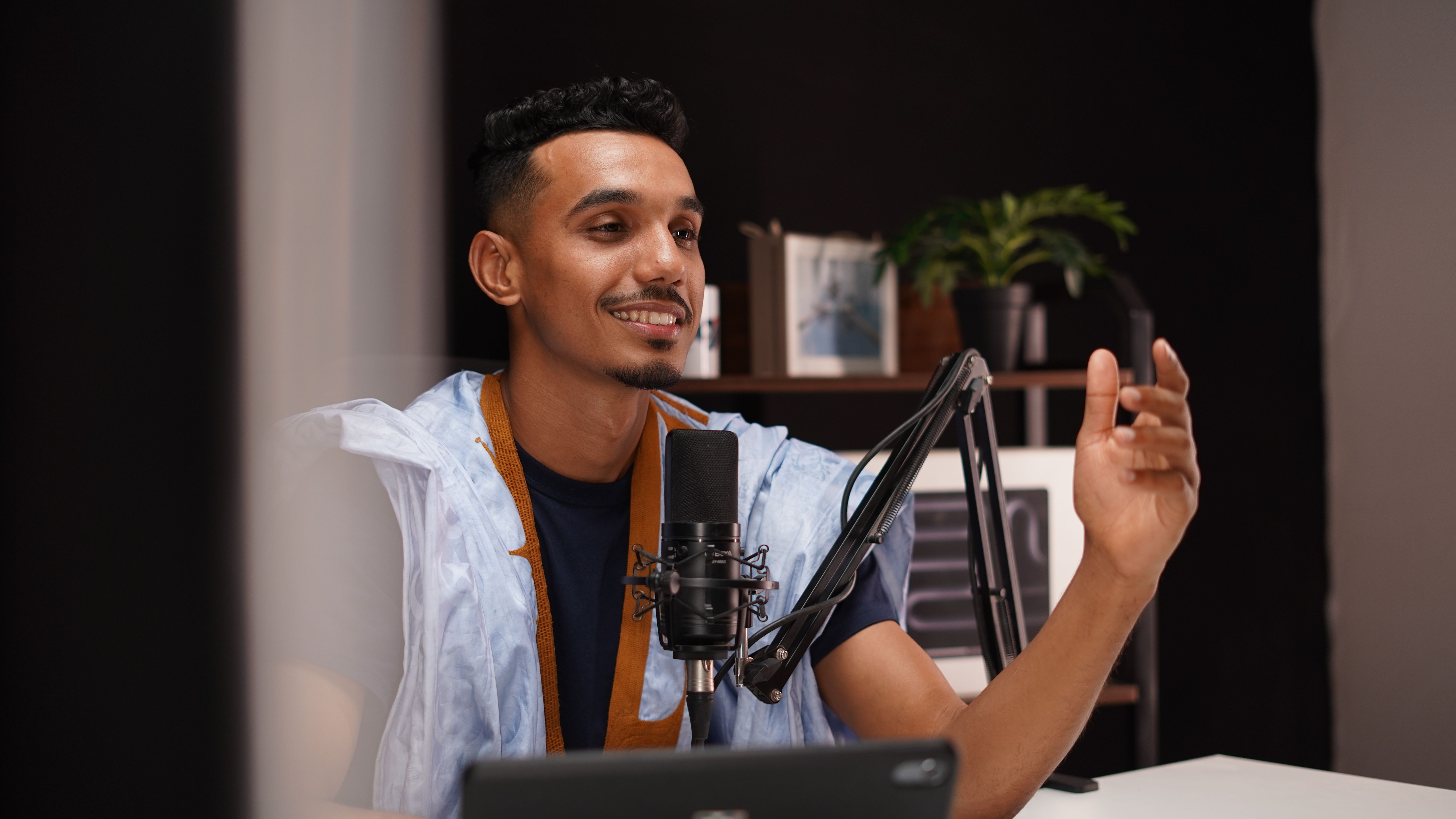
This is where a B2B podcast becomes a genuinely different kind of channel. Instead of cold-pitching a head of leadership development at a target enterprise, you invite them to be a guest on a show about the future of corporate learning.
That is not another sales request they delete, it is an offer of something they want: a platform, an audience and content that builds their own profile. They say yes because you are giving rather than taking.
The novelty is the point. It is not a cold email or a LinkedIn connection request, it is a channel they have not been pitched on before.
What you get from that one conversation is two outcomes at once. You build a real, warm relationship with a senior buyer at exactly the account you want to win, the kind of relationship that gets you onto the next framework cycle and into the room before the RFP.
And you turn the recorded conversation into authority content that demonstrates your expertise to every other buyer in the market. One conversation, two outcomes, both compounding.
Think of it as running your own micro-conferences continuously, with conference-grade warmth, minus the travel and the stand. This is the model ThePod.fm builds for relationship-led firms, and the mechanics of guest selection matter as much as the show itself, which is why a deliberate B2B podcast guest strategy is what separates a content project from a pipeline engine.
How do you prove ROI to a procurement-led training committee?
Senior L&D buyers are under more pressure than ever to justify spend. The LinkedIn 2025 report describes a sector where 49% of learning and talent-development professionals feel the pressure of a skills crisis, which means every training investment is scrutinised against measurable capability gains.
Procurement reinforces this by demanding evidence, references and clear success metrics before they will approve a supplier.
To win on ROI, do three things consistently. First, anchor every conversation to the business-unit sponsor's numbers, not learning metrics.
Sales-cycle reduction, ramp time, retention of high performers and promotion rates land harder than course-completion rates. Second, bring first-hand outcome data, not generic industry claims.
References from comparable enterprises, before-and-after performance figures and named programme results carry the weight procurement needs. Third, use your content channel to make that proof visible continuously, so the committee encounters your expertise and your results repeatedly during their long independent-research phase rather than only in the proposal.
A podcast that features your own clients and credible industry voices does this naturally, and pairing it with documented B2B podcast case studies gives a sceptical committee something concrete to reference. The goal is that by the time procurement runs its process, you are the supplier the committee is already defending internally.
If you are mapping the wider picture, this enterprise-access angle sits inside a broader approach to B2B marketing for learning and development, works alongside top-of-funnel lead generation for learning and development, and is enabled by the practical steps in how to start a B2B podcast for learning and development.
FAQ
How long does it take to win an enterprise training contract?
Expect nine to eighteen months from first meaningful conversation to signed contract for a large enterprise programme, and longer if multiple regions or business units are involved. Forrester puts the average B2B purchase at 13 stakeholders across two or more departments, and most of that work happens before suppliers are formally engaged, which is why early relationships matter so much.
Do we have to be on a preferred-supplier list to win enterprise L&D work?
For many large corporates and public-sector bodies, yes. Once a framework or preferred-supplier list is in place, purchases are made as call-offs against approved vendors, so firms outside the list are effectively excluded.
Getting on combines compliance credentials with relationships with the senior L&D and procurement leaders who shape and refresh those frameworks.
Why do incumbents win so often in enterprise training?
Because they were present during the long independent-research phase and shaped the buying criteria before the RFP existed. Forrester's data shows 68% of B2B buyers already have a front-runner vendor in mind at the start, and that front-runner wins 80% of the time.
The way to overcome an incumbent is to build the relationship and authority that make you the preferred vendor next time, not to write a stronger proposal at the end.
How does a podcast help win enterprise training contracts?
It gives you a non-salesy, welcome reason to get senior L&D and HR buyers into a real conversation as guests, building trust months before any RFP, while producing authority content that proves your expertise to the rest of the committee. One conversation delivers both a warm relationship at a target account and durable proof of credibility.
If your growth depends on getting trusted by senior L&D and HR leaders before the RFP exists, a B2B podcast gives you a structured, welcome reason to start those conversations. ThePod.fm runs done-for-you B2B podcasts that book your ideal enterprise buyers as guests and turn every episode into authority content, so one conversation builds the relationship and the proof that win the contract. Book a call to plan your enterprise-access podcast.