


Why a podcast fits how L&D buyers actually buy
Learning and development is a trust business. Nobody hands a leadership-pipeline or reskilling programme to a stranger, and the people who sign off on those contracts are not browsing cold emails for new vendors.
They are senior, busy and sceptical of anyone selling them training. So the question is not whether your firm should produce content.
It is how you get in front of a Chief Learning Officer or a VP of Talent in a way they actually welcome.
The buying behaviour backs this up. Forrester's research on B2B trust found that buyers rate independent experts and industry peers far above salespeople, with peers and analysts trusted by roughly two-thirds to three-quarters of buyers while salespeople and influencers sit at the bottom.
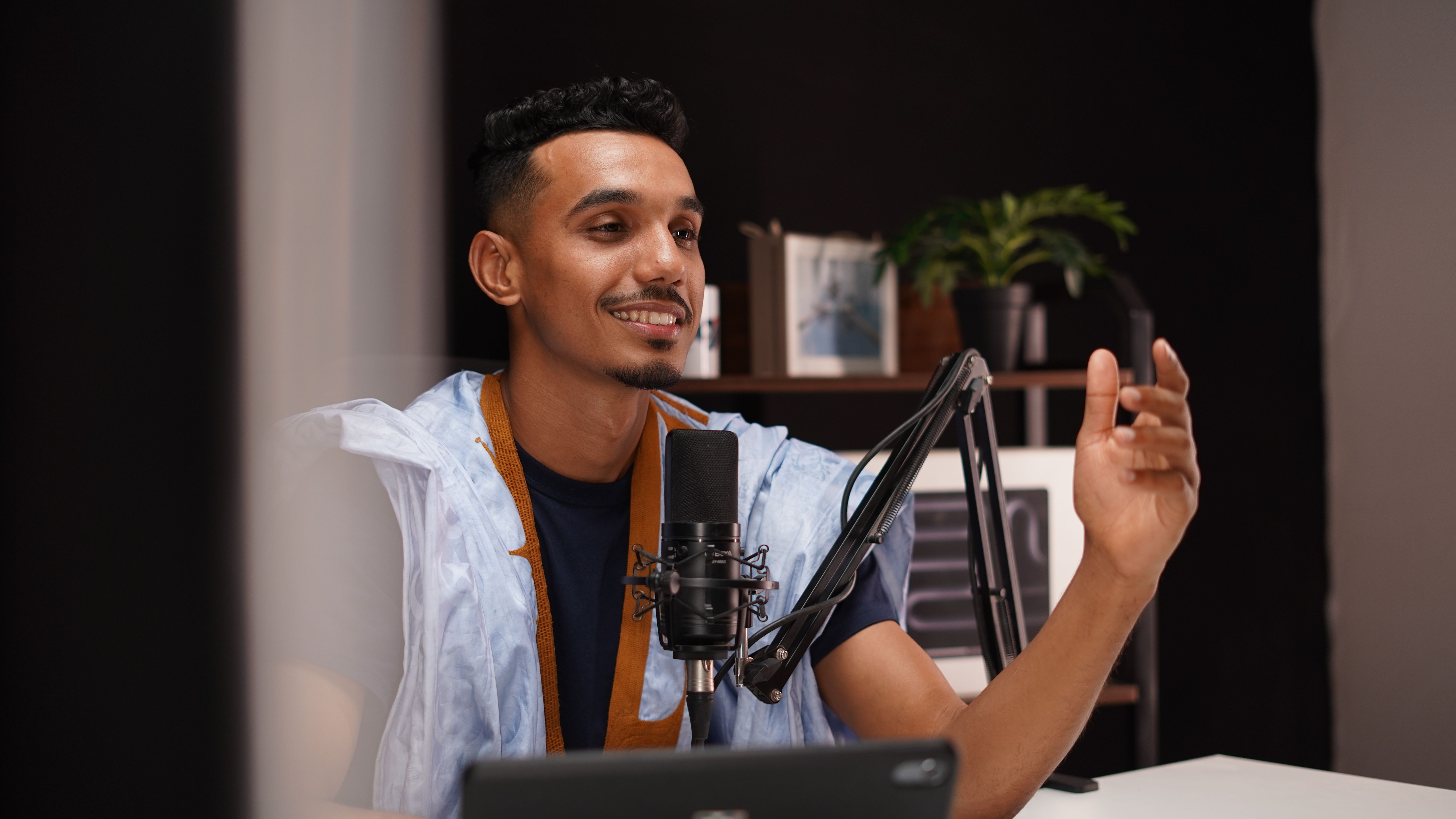
A podcast is one of the few formats that lets a Head of L&D experience your expertise as a peer conversation rather than a pitch. You are not the vendor emailing them.
You are the host giving them a platform.
That is the channel novelty that makes this different from your existing outreach. A cold email or a LinkedIn connection request asks the buyer for something.
A guest invitation offers them something: an audience, a polished piece of content with their name on it, and a genuinely interesting hour. It is a channel they say yes to because it is built around them, not you.
For an L&D firm that has been leaning on conference booths and referral networks, that is a structurally new way to reach the exact people you need.
Who an L&D firm should book as guests
The single biggest decision is your guest list, because in this model your guests and your buyers are the same people. You are not booking other training consultants or learning influencers for reach.
You are booking the executives who own training budgets:
Chief Learning Officers and VPs of Learning at enterprises in your target sectors. These are the economic buyers for managed learning and leadership programmes, and they rarely respond to outbound.
VPs and Directors of Talent, Heads of Talent Development, and Heads of L&D at companies in the 1,000-10,000 employee range, where there is a real budget but no in-house production capacity to do everything internally.
CHROs and People/Culture leaders who sit above L&D and increasingly own the skills agenda, especially where reskilling has become a board-level concern.
Functional leaders adjacent to L&D who shape demand, such as a VP of Sales who wants enablement or an engineering leader rebuilding skills around new tools. They influence the buying committee even when they do not own the budget.
Notice the discipline here. Every name on that list is someone you would be happy to have as a client.
When you build a deliberate guest strategy around your actual buyer map rather than around download potential, the show stops being a marketing cost and starts being a pipeline-generation channel. The relationship is the product.
The audio is the proof.
One practical tip on segmentation: in L&D, the buying committee is rarely one person. The Head of L&D often runs the evaluation, but the CHRO sponsors the budget and a line-of-business leader feels the pain the training is meant to fix.
A podcast lets you reach all three without a formal pitch. You can book the Head of L&D as your main guest, invite the line-of-business leader for a separate episode on the same theme, and reference the CHRO's strategic priorities in your questions.
Over a season you can map and warm an entire account's buying committee, one welcome conversation at a time, rather than trying to break into it cold.
What show formats build authority in learning and skills
L&D buyers do not care about your microphone. They care about whether you understand the problem keeping them up at night.
The format should make that obvious. A few that work in this field:
The skills-shift interview. One senior guest, one hard question: how are you preparing your workforce for the fact that, in LinkedIn's analysis, 70% of the skills used in most jobs are expected to change by 2030? This positions your firm at the centre of the reskilling conversation every CLO is having.
The measurement clinic. Bring on a Head of L&D who has cracked, or is wrestling with, the hardest problem in the field: proving training ROI to the CFO. Buyers will listen to this episode three times. It signals you speak their internal language.
The leadership-pipeline series. A recurring format on building leaders from within, with VPs of Talent walking through what worked. Leadership development is consistently one of the most-bought training categories, so owning this conversation maps directly to revenue.
The retention angle. LinkedIn's Workplace Learning Report found that 90% of organisations are concerned about retention and that learning opportunities are the No. 1 retention strategy. An episode framed around "learning as a retention lever" gives your guest something useful to say to their own CEO, which makes them far more likely to share it.
Pick two formats and run them consistently. Depth beats variety here.
A buyer who hears three sharp episodes on measuring training ROI will conclude you understand their world better than a competitor with fifty scattered ones.
What topics L&D buyers actually care about
Your editorial calendar should read like the agenda of an L&D leadership offsite, not a list of training-industry buzzwords. The themes that pull senior guests in and keep buyers listening:
The skills gap and reskilling at scale. With the rate at which professionals add new skills climbing sharply, and the same LinkedIn research noting people are on pace to hold twice as many jobs as fifteen years ago, every talent leader is under pressure to build skills faster than roles change.
Measuring the ROI of training. The perennial boardroom challenge. Episodes that move past "smile sheets" toward business-impact measurement are gold.
Building leadership pipelines and succession in a market where senior talent is scarce and expensive to replace.
Making learning stick in the flow of work, and the shift away from one-off courses toward continuous development. LinkedIn found that learners who set career goals engage with learning roughly four times more, a useful hook for episodes on motivation and adoption.
AI's impact on the workforce and what it means for how organisations train people.
These topics are not filler. They are the exact questions your buyers are accountable for answering inside their own organisations.
When your show consistently helps them think those questions through, you become the firm they call when they need help, not a name in an inbox.
A note on positioning your firm within these conversations: resist the urge to make every episode about your methodology. The fastest way to lose a senior guest, and to bore a listening buyer, is to turn the show into a product demo.
Lead with the topic and let your expertise surface through the questions you ask and the patterns you notice across guests. If you have run reskilling programmes for ten enterprises, you can say "the firms that make reskilling stick tend to do one thing differently" and then ask your guest whether they have seen the same.
That is authority earned through experience, which is exactly the signal buyers in a trust-led field are looking for, and it never reads as a sales pitch.
How to turn a guest who is a target buyer into a client
This is the part most firms get wrong, because they treat the episode as a sales appointment. It is not.
The whole reason a senior buyer said yes is that you offered a conversation "without selling or being looked down upon". Break that and you lose both the relationship and the content.
Here is the pattern that works:
Spend the episode being genuinely useful. Ask the questions that make your guest sound smart to their peers. Your expertise comes through in the quality of your questions, not in a pitch. By the end, they have experienced your judgement first-hand.
Let the relationship continue naturally. You share the finished episode, they share it with their network, you check the metrics together. You are now two professionals who have built something. That is a warmer footing than any discovery call.
Follow up on the problem, not the product. If they mentioned a reskilling challenge on the recording, send them a relevant idea or introduction a week later. The conversation about working together tends to start itself, because you have already demonstrated you understand their problem.
This is the same mechanism behind turning podcast guests into clients in any B2B field, and it maps closely to how this vertical wins work in the first place. We cover the deal side in detail in our guide to how L&D companies win enterprise training contracts, and the broader demand engine in our pillar on B2B marketing for learning and development.
How episodes become authority content for a field that sells trust
Here is where the dual value comes in, and it is genuinely two co-equal outcomes from one conversation, not a freebie on the side. The warm relationship is the first outcome.
The second is a library of authority content that keeps working long after the call ends. Each recording becomes a published episode, a set of clips, a written piece, and quotable expert commentary, all carrying the name of a respected CLO or VP of Talent alongside yours.
That matters more in L&D than in almost any other category, because you are asking buyers to trust you with their people. Expert-led, original content is exactly what earns that trust, and it compounds.
A prospect evaluating you next quarter finds a back catalogue of senior leaders endorsing your thinking by agreeing to appear. This is the same logic behind treating your show as a B2B podcasting content engine rather than a one-off broadcast, and it is why podcast-led pipeline tends to outlast a campaign of cold email that resets to zero each month.
It is also where the economics get interesting. Most L&D firms anchor their business-development spend on conferences, where a single event runs $3,000 to $12,000 in fees alone before you add flights, hotels and the days your team is out of the office, all for a handful of rushed hallway conversations.
A podcast delivers that same conference-grade warmth continuously, as a series of micro-conferences you run on your own schedule, without the booth or the travel. One client we worked with booked 40-plus meetings with people from a list of 3,500 target companies on this model.
For a relationship-led L&D firm, that is the difference between hoping the right CLO walks past your booth and choosing exactly which ones you want to talk to.
FAQ
How is this different from a generic "how to start a B2B podcast" guide?
The mechanics of recording are similar, but the strategy is specific to L&D. Your guests are the exact executives who buy training, your formats are built around skills gaps and training ROI, and your conversion path respects how cautious senior learning buyers are. A generic guide optimises for downloads; this one optimises for pipeline from CLOs, VPs of Talent and Heads of L&D.
Who should we actually book first?
Start with five to ten named executives you would genuinely want as clients, ideally Heads of L&D or VPs of Talent at companies that fit your sweet spot, plus one or two recognisable CLOs to anchor the show's credibility. Booking real buyers from day one is the whole point, so do not pad the list with peers or influencers who will never sign a contract.
How long before a podcast generates pipeline?
Because each episode is a direct conversation with a buyer, relationships can begin from the first recording rather than after months of audience-building. The authority-content benefit compounds more slowly, but the warm-conversation benefit is immediate, which is why this approach does not depend on hitting download milestones to be worth doing.
What if we don't have time to produce it ourselves?
Most L&D firms do not, and trying to run production in-house is where these shows usually stall. The recording is the only part that needs your expertise; guest booking, editing, content repurposing and distribution can be handled for you so your team only shows up for the conversation.
If your growth depends on relationships with senior learning and talent leaders, a done-for-you B2B podcast can put you in the room with them on a channel they actually welcome. Book a call with ThePod.fm to map your buyer list to a guest list and see what a podcast-led pipeline would look like for your L&D firm.